A good meal needs a proper ending. Not just dessert but something that tells the room the night has shifted. Digestifs have done that job for centuries, in monasteries, in restaurants, in private clubs, and at the kind of dinner parties where people actually care about what they’re drinking.
We hosted an evening of digestifs for a small group. Six bottles, poured in order from light to heavy, each with a story worth knowing. What follows are the notes from that night.
Both evenings were produced by the Society of Scents and Spirits under The Society Table, our curated tasting experience for private dinners and corporate events. The spirit selection, serving order, cocktail pairings, and tasting cards were all designed in-house. If you want to bring something like this to your table, reach out at sales@societyofscentsandspirits.com.
SSS Events — A Two-Part Series
1. Why Serving Order Matters
Digestifs are not all the same thing. The category runs from light, sweet amari to 110-proof herbal spirits that taste like they were formulated by monks with a grudge. Serve them in the wrong order and you ruin the experience.
The rule is simple. Start light. Let the palate warm up. Save the bitter and the intense for the end, when the food is behind you and the conversation has slowed down. Sweet first. Complexity in the middle. The difficult stuff last.
Same logic as a whisky tasting, a wine flight, a cigar pairing. The order is part of the drink. Get it wrong and everything that follows tastes flat.
2. The Six Bottles
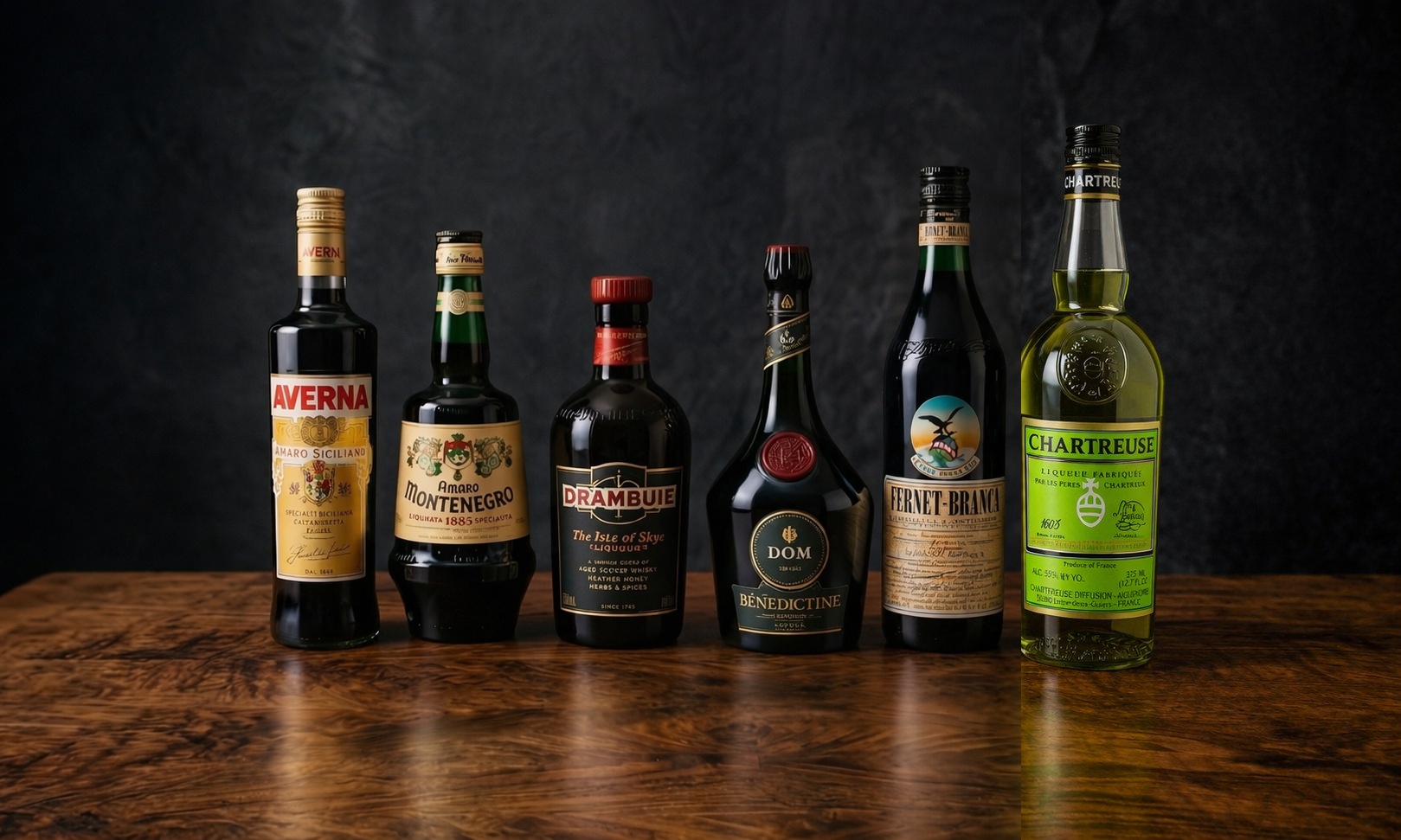
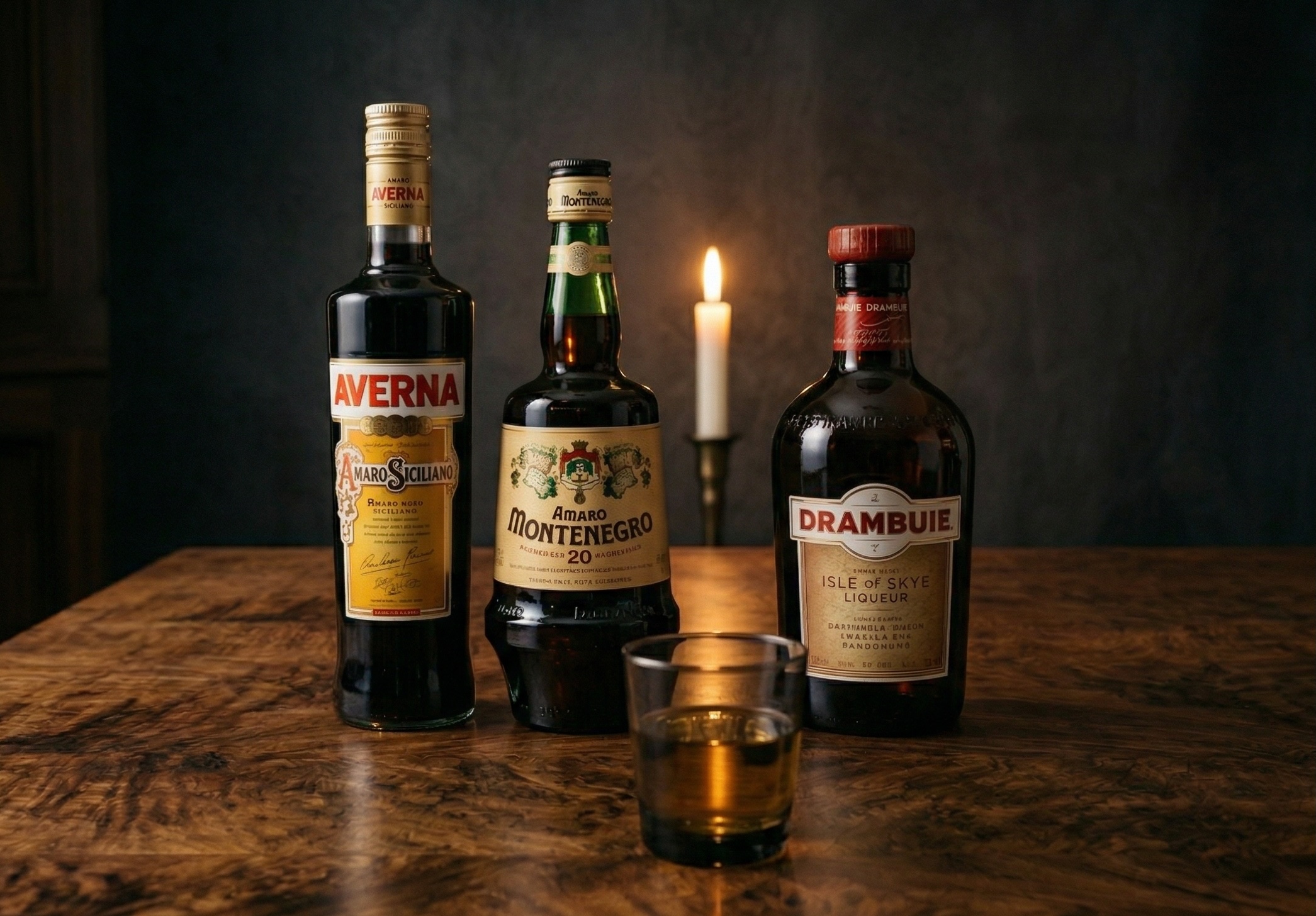
The evening ran in this order: Averna, Amaro Montenegro, Drambuie, Bénédictine, Fernet-Branca, Chartreuse Verte. Light to heavy, sweet to bitter, familiar to demanding.
Sicily, 1868. Herbs, roots, and citrus peel steeped in spirit, sweetened and coloured with caramel. On first contact it almost feels like dessert. That’s intentional.
You start here because it asks nothing of the guest. For people who don’t normally drink amaro, this is the conversion point. Sweet enough to be easy, bitter enough to be honest. Everything that follows will make more sense after this glass.
Created in 1885 by Stanislao Cobianchi as Elisir Lungavita, then renamed in 1896 for Princess Elena of Montenegro, who married Victor Emmanuel, Prince of Naples and later King Victor Emmanuel III, that October. Around 40 botanicals: vanilla, orange peel, and eucalyptus among them. Lighter and more floral than most Italian amari.
Bartenders reach for this one constantly because it cooperates. Most bottles in this category have strong opinions. Montenegro doesn’t fight the other ingredients. Neat, it’s gentle, almost quiet. It sits between Averna and what comes next without anyone noticing the transition.
Aged Scotch whisky, heather honey, herbs, and spices. The legend says Bonnie Prince Charlie gave the recipe to a MacKinnon clan member in 1746 after the clan sheltered him following Culloden. Historians treat that as a story built to sell bottles. What is documented is that the Ross family of the Broadford Hotel on Skye worked the recipe up commercially and registered the Drambuie trademark in 1893, with the MacKinnons taking over production about fifteen years after that. Rich, warming, and drinkable. By this point in the evening, people are leaning in.
The label tells you the origin story starts at the Benedictine Abbey of Fécamp in Normandy in 1510, where a monk supposedly made a medicinal elixir from 27 plants and spices, lost after the Revolution and rediscovered in an old manuscript in 1863. It is a great story. Most historians treat it as marketing, invented by wine merchant Alexandre Le Grand around 1863 to sell the liqueur he'd actually just created, rather than verified monastic history.
Whatever the true origin, every bottle still reads D.O.M.: Deo Optimo Maximo. To God, most good, most great. Angelica, hyssop, saffron, coriander, lemon balm, and two dozen more. There is nothing simple in this glass.
Twenty-seven herbs, roots, and spices which the house says come from five continents. Branca dates it to Milan in 1845, to Bernardino Branca, and says the formula has not changed since. It lives in a safe only the company chairman can open, handed down father to son. Myrrh, rhubarb, chamomile, gentian, aloe, saffron, plus whatever else they’re not telling you. It sits in oak for a year before it goes anywhere near a bottle.
Ask a bartender what they drink after a long shift. The answer is usually this. It’s not for everyone the first time. That’s expected. The Ferrari cocktail below is built on exactly this tension.
Carthusian monks, French Alps. 130 plants, flowers, and herbs. By the order’s own account the secret formula is held by two people at a time, though other accounts say three. The manuscript was handed to the Carthusians in Paris in 1605 by the French marshal François-Annibal d’Estrées, reached the Grande Chartreuse in 1737, and was finally written out in full in a seven-page document in 1764. The green liqueur in this glass was named and released as Chartreuse Verte in 1840.
One of the few liqueurs said to keep developing in the bottle after it’s sealed, though that claim is contested. The monks capped output at 1.6 million bottles a year, and the shortage that followed has turned older bottles into collector’s items. At 110 proof and 130 botanicals, nothing else on this table comes close. Serve it cold. Pour it small.
3. The Cocktails
After the flight, four cocktails. Each built on one of the evening’s bottles, to show there’s more to digestifs than drinking them neat.
The definitive Scotch cocktail. Usually credited to the bartenders at New York’s 21 Club in the early 1960s, though the same two-ingredient build was printed as the B.I.F. back in 1937; the Rusty Nail name only stuck in 1963. Drambuie softens the Scotch and leans into the honey. Two ingredients. Doesn’t need a third.
Chartreuse and gin is one of the more underrated combinations in the glass. Both herbal, both botanical, both opinionated. The lime stops it from becoming too much. Small pour of Chartreuse. It still runs the table.
Named for the D.O.M. monks. Bénédictine on a clean vodka base, framed by lemon and maple syrup. The vodka stays out of the way and lets the liqueur do the work. Tastes more put-together than it has any right to.
Equal parts Fernet-Branca and Campari. Nobody knows who made it first. The name is the color. This is what bartenders pour for each other when the shift is done and the mats are up. Campari pulls the menthol edge off the Fernet. Fernet cuts Campari’s bitterness. Salt sharpens both. It shouldn’t work as well as it does.
Order this at a bar without being prompted. The bartender will notice.
Three more digestif cocktails came later in the evening: the Montenegro Mule, the Toronto with Fernet-Branca and rye, and the Averna Sour. All seven recipes are on the cocktail card from the event.