Rum leads this installment since it ties directly back to the colonial story in Part 1, before whiskey ever entered the picture. Tequila, gin, vodka, and liqueurs each get their own section after it.
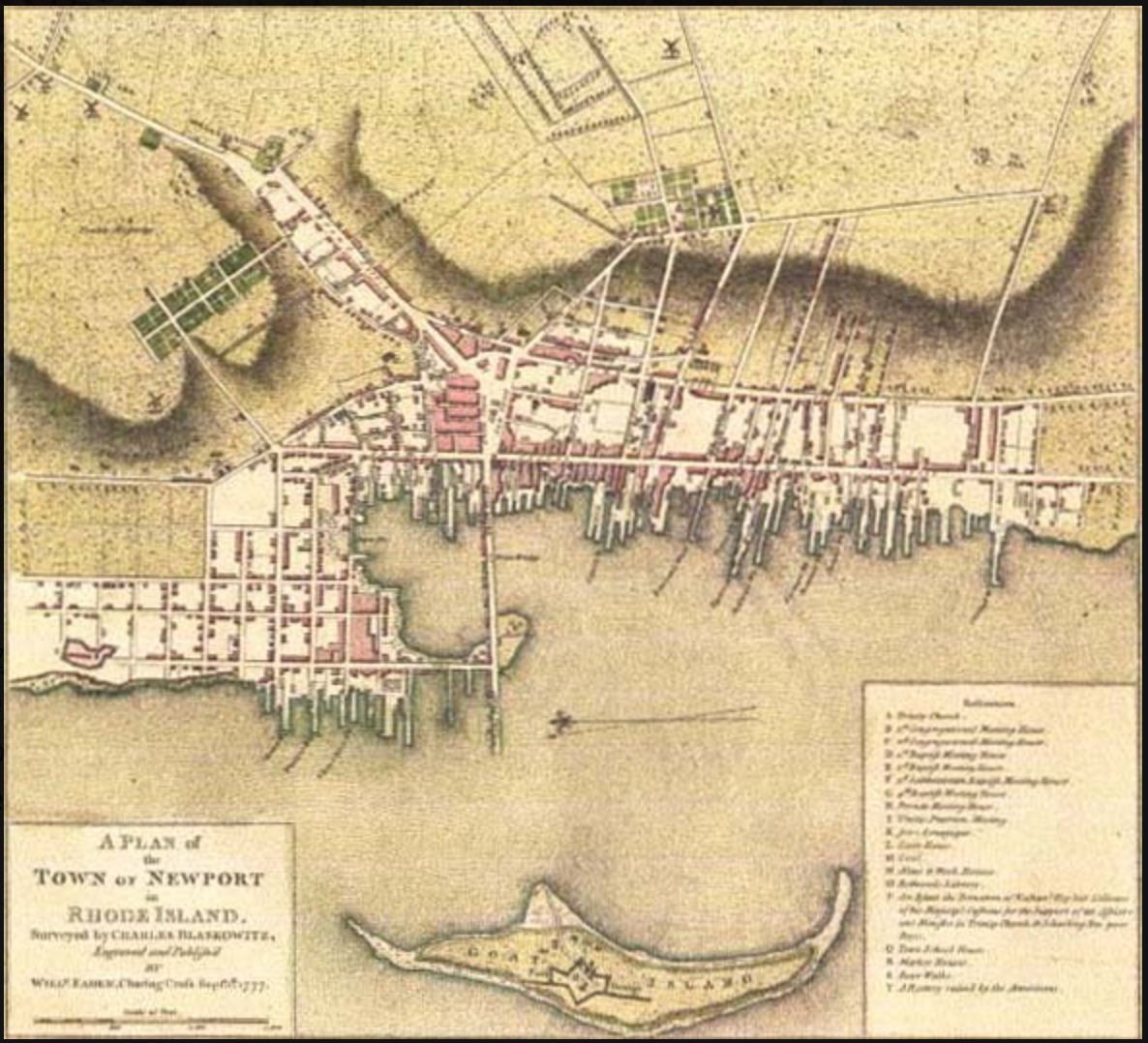
Newport, Rhode Island, once home to 22 rum distilleries at its colonial-era peak.
America's 250th — A Five-Part Series
18. Rum Came First
Part 1 already mentioned that colonists drank an estimated 3.7 gallons of rum a year per person by the time of the Revolution. This section goes deeper, because rum was not a side note to early America. For most of the 1700s, it was the industry.
New England became one of the largest rum-producing regions in the world before the country existed. By 1770 Massachusetts had 51 distilleries, 36 of them in Boston, and Newport, Rhode Island alone had 22 running at its peak out of nearly 30 in that colony. Massachusetts on its own turned out more than 40 percent of North America’s rum in the years before the Revolution.
The trade ran on Caribbean molasses, and this is not a footnote, it is the actual foundation of the industry. Ships carried New England rum to West Africa to trade for enslaved people. Those ships carried enslaved people to the Caribbean to trade for more molasses. The molasses came back to New England to be distilled into more rum. That is the triangular trade, and Rhode Island in particular controlled a large share of the entire North American slave trade on the strength of it.
The Molasses Act of 1733 taxed molasses imported from non-British sources, an attempt to protect British Caribbean planters. New England largely ignored it and smuggled French molasses instead, since it ran up to 40 percent cheaper. The Sugar Act of 1764, which actually tried to enforce collection, hit Rhode Island’s economy hard enough that the colony sent a formal protest to London, and it became one of the direct sparks toward the Revolution, a straight line from rum taxation to independence, a full generation before Hamilton’s whiskey tax caused the same kind of trouble.
The industry did not survive the early 1800s in any recognizable form. Once the international slave trade was outlawed and French Caribbean rum production expanded, New England’s distilleries lost their supply chain and their market at the same time. Tax policy finished the job after the War of 1812: from 1817 to 1862 American whiskey distillers paid no federal excise while imported rum and molasses carried heavy tariffs, and America’s drinking habits shifted west into corn and whiskey instead, the handoff Part 1 already covered from the whiskey side.
What exists today is a different industry with no connection to that supply chain. Prichard’s Distillery in Tennessee, launched in 1997, is generally credited as an early mover in the modern American rum revival. Privateer Rum, distilling in Ipswich, Massachusetts since 2010, set out specifically to revive the old New England style: long, cool fermentation, dry finish, heavy oak influence, closer to a whiskey drinker’s palate than a Caribbean one. Richland Rum in Georgia grows its own sugarcane and distills it on the estate, and for years billed itself as the only American single-estate rum in the country. Its founders prefer the term “single estate rum” to “American rum,” a distinction that matters more to them than the flag on the label.
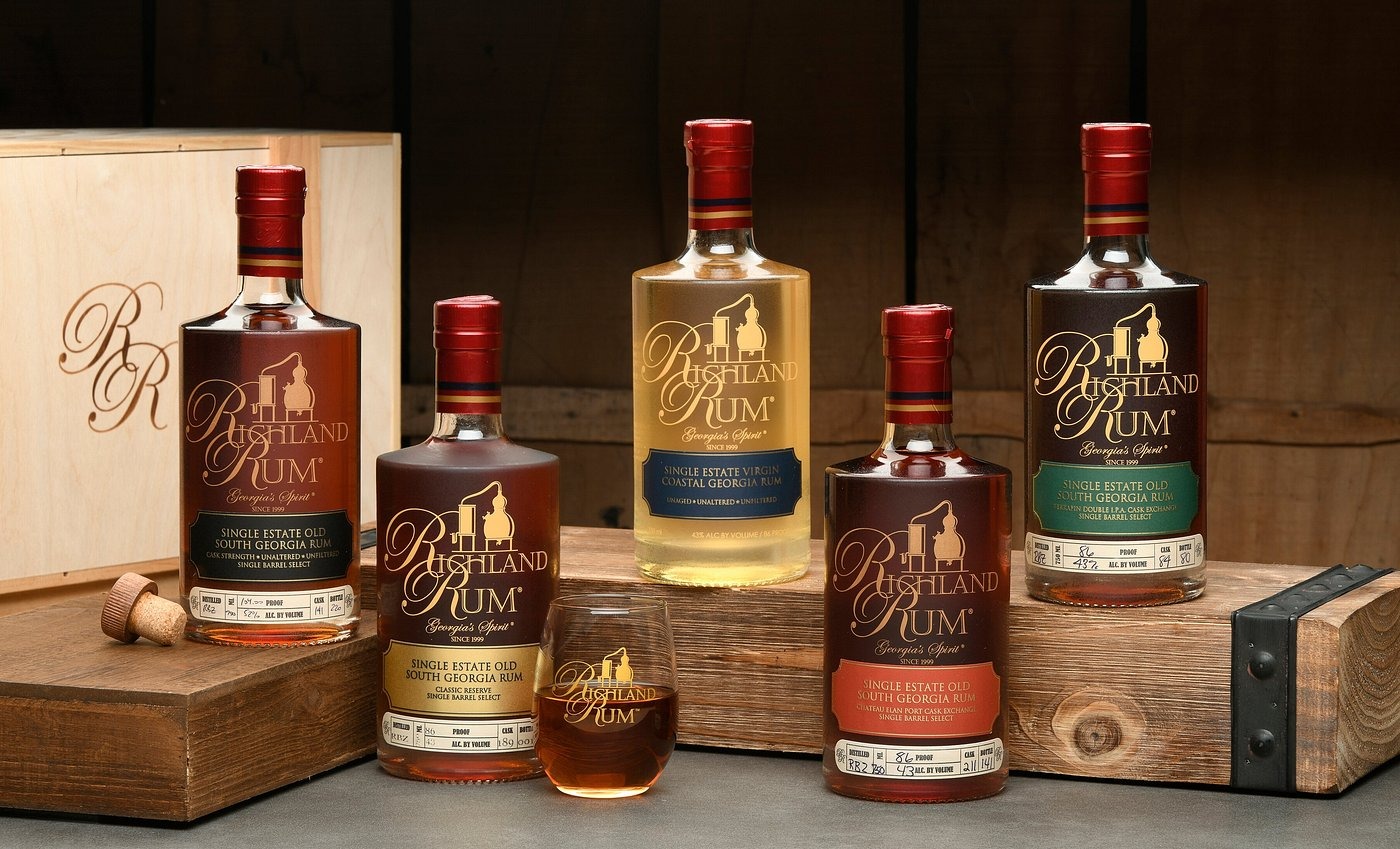
Richland Rum’s lineup, distilled from sugarcane grown on its own Georgia estate.
19. Tequila, American by Consumption, Not by Law
Tequila is the one spirit in this piece that cannot legally be made in America. That deserves a direct explanation, right up front.
Since 1974, the Mexican government has owned tequila as protected intellectual property, a Denomination of Origin. A 1994 NAFTA provision, carried forward into the USMCA, means the United States and Canada cannot legally sell anything as “tequila” unless it is produced in Mexico, specifically in Jalisco and small designated parts of four other states, from at least 51 percent blue Weber agave.
So every American tequila brand, celebrity-backed or otherwise, is a marketing and distribution company, not a producer. Casamigos makes the point most directly. George Clooney, Rande Gerber, and Mike Meldman started it in 2013 as a private tequila for their own use while building neighboring vacation homes in Cabo San Lucas, made to their specifications by a distillery in Jalisco. Demand from friends eventually forced them to go commercial, and Diageo bought the brand in 2017 for up to a billion dollars. It is a fully American company built entirely around a spirit that, by law, has to stay Mexican from start to finish.
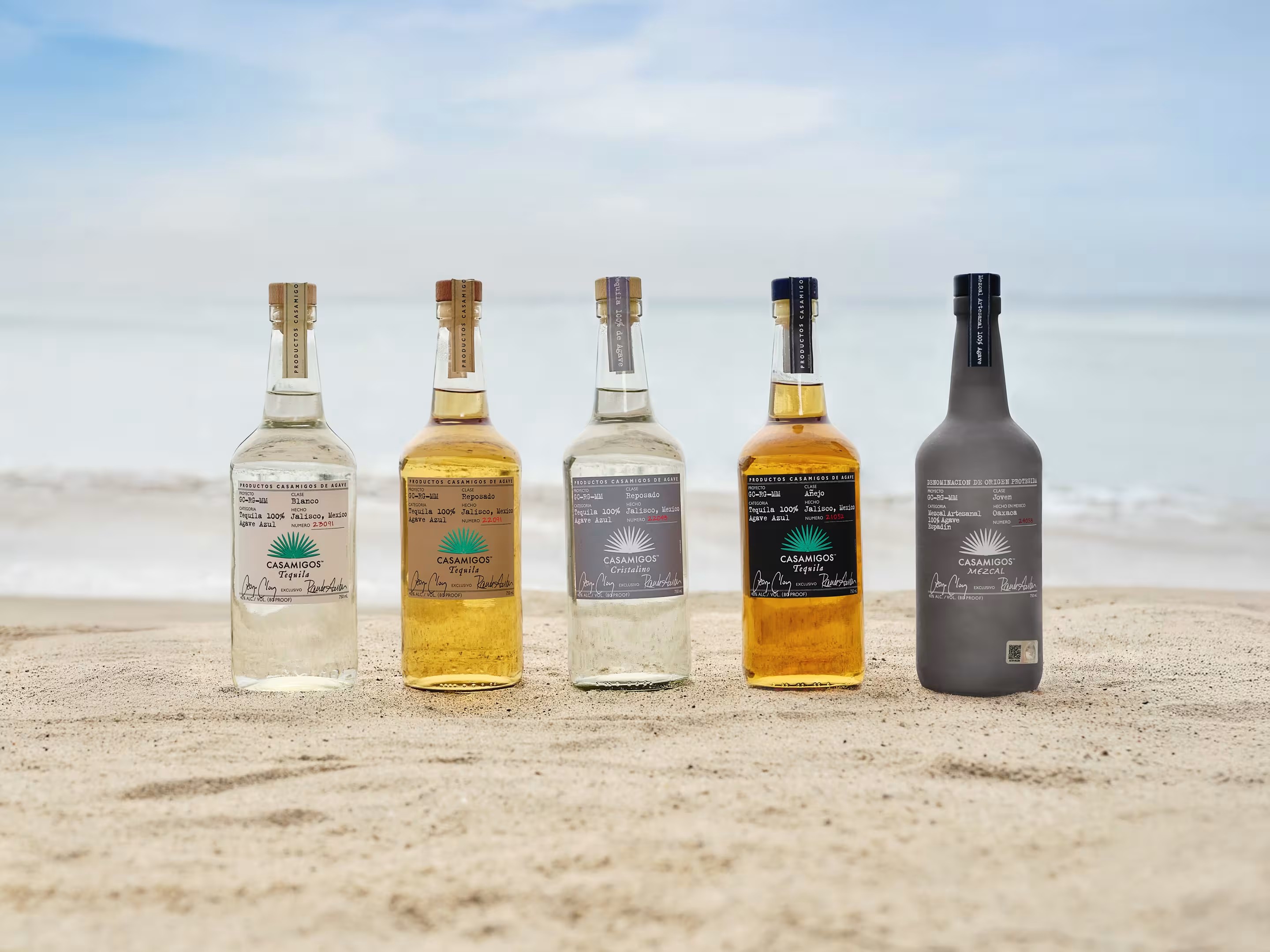
Casamigos, marketed by an American company, distilled entirely in Jalisco under Mexican law.
Every legal bottle of tequila carries a four-digit NOM number on the label, the Mexican government’s registration number for the specific licensed distillery that actually made it. The Consejo Regulador del Tequila, or CRT, is the body that actually issues and audits those NOM numbers, inspecting and certifying every registered producer against Mexico’s official tequila standard. American brands aren’t purely a marketing exercise layered on top of someone else’s product. Many lease production time at a named NOM-registered facility or contract a specific master distiller there, a real production relationship, just not an ownership one.
What America has instead is a real, separate legal category: agave spirits. The US Alcohol and Tobacco Tax and Trade Bureau formally recognizes it, distilled from at least 51 percent agave but made anywhere, mostly in California, Texas, Arizona, and Hawaii, using agave grown domestically or piñas and syrup imported from Mexico. These cannot legally be labeled tequila or mezcal, so producers use language like “American agave spirit” instead.
California has seen real growth here, partly because agave needs very little water, appealing during years of drought. Growers formed the California Agave Council, and the state passed a law requiring anything labeled “California agave spirit” to use only state-grown plants with no additives.
The bigger cultural point is this: America drinks far more tequila by volume than Mexico’s own domestic market does, and has built an entire industry of ownership, marketing, and money around a spirit it is legally barred from actually producing. That is an unusual kind of American relationship with a foreign spirit, enthusiastic consumption paired with real respect for the legal line around who gets to make it.
20. Gin, From Bathtub to Terroir
Prohibition gave American gin its reputation problem. Homemade batches were quickly redistilled grain alcohol cut with juniper oil and glycerin, mixed in whatever was on hand, sometimes literally in a bathtub because the tub’s faucet was the only one tall enough to fill a jug with water for cutting the alcohol.
After repeal, gin never fully recovered its domestic reputation the way whiskey and vodka eventually did. For decades it sat in a slightly old-fashioned corner of the bar, tied to 1950s dry martinis and not much else.
In 1982, Jörg Rupf founded St. George Spirits in Alameda, California, generally credited as the first small American craft distillery since Prohibition. It started with eau de vie, not gin, but became a genuine pioneer of what is now called New Western or International style gin: still built on juniper, but built around a wider, often local botanical bill instead of the classic London Dry formula.
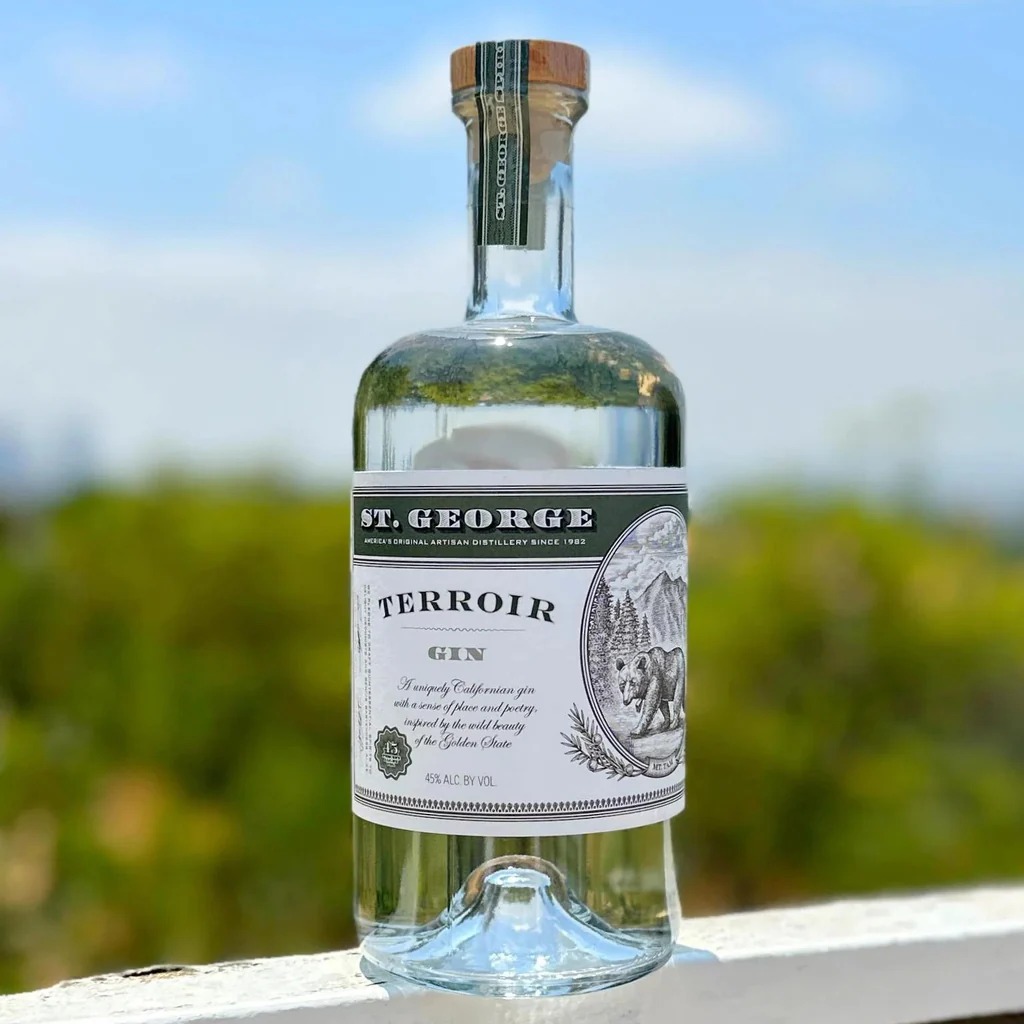
St. George’s Terroir Gin, built around Douglas fir, bay laurel, and coastal sage.
St. George’s Terroir Gin is a good example of the idea in practice. It is built around Douglas fir, California bay laurel, and coastal sage, a gin engineered to taste like a specific Northern California forest instead of a specific London recipe. That approach opened space for the wider American craft gin movement that followed over the next few decades, distilleries treating gin as a genuinely creative category rather than a fixed 18th-century formula.
21. Vodka, the Spirit Nobody Wanted, Then Everybody Did
Before 1940, vodka barely registered in American drinking, mostly limited to Eastern European immigrant communities. A 1939 trade manual dismissed it as unnecessary to any but the largest bars.
Smirnoff’s American story starts with the Smirnov family fleeing Russia after the 1917 Revolution. They spent decades failing to reestablish the brand in Europe, eventually sold US rights to a fellow Russian emigre, Rudolph Kunett, who also failed to make it work and sold the license in 1938 to John Martin of G.F. Heublein and Brothers for roughly $14,000.
Around 1940 or 1941, at the Cock ’n’ Bull restaurant in Hollywood, Martin had a warehouse full of Smirnoff nobody wanted. His friend Jack Morgan, who owned the Cock ’n’ Bull, had a warehouse full of unsellable house-brand ginger beer. A Russian immigrant named Sophie Berezinski is said to have turned up separately trying to unload 2,000 copper mugs made at her family’s factory back home, though Martin’s own telling named a different woman entirely. Between three unrelated surplus problems, the Moscow Mule got invented, credited variously to bartender Wes Price or to Martin and Morgan directly, depending on which account you believe.
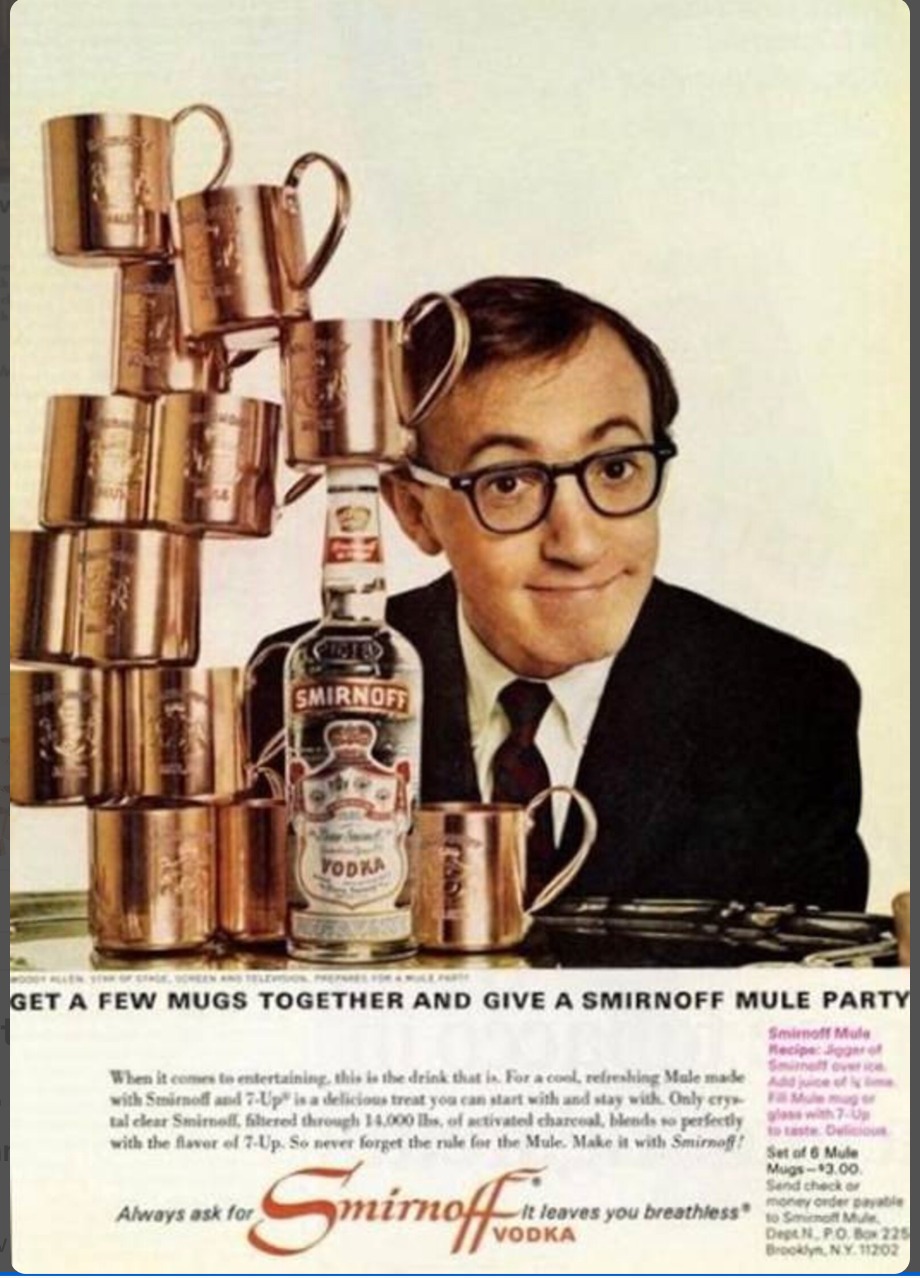
A vintage Smirnoff advertisement, pairing the bottle with the copper mug that helped launch it.
Martin then spent years driving around the country in person, photographing people drinking Moscow Mules in one city’s bars with a Polaroid camera, then showing that photo to the next bar as proof the drink was already catching on elsewhere. It worked. Vodka sales went from roughly 40,000 cases in 1950 to more than four million by 1955.
The bigger marketing move came a few years later. Smirnoff’s “It Leaves You Breathless” campaign, launched in the early 1950s, sold vodka on what it didn’t do: leave a smell on your breath. That pitch was aimed squarely at people who wanted a lunchtime drink their boss wouldn’t notice, and it did more to normalize daytime vodka drinking than the Moscow Mule ever did.
The Cold War hit the brand hard through the 1950s. A Russian-sounding name became a liability, and Smirnoff’s advertising leaned hard on its Imperial Russian pedigree to keep clear of Soviet associations, even though the vodka had been made in Connecticut by a Hartford company since the 1930s, an irony that mostly got lost in the politics of the moment.
Vodka’s larger rise in America from there ran mostly on the fact that it carries almost no flavor of its own and mixes into anything, which made it the easiest spirit in the bar to build a marketing campaign around rather than a drinking tradition. It passed whiskey as America’s most-consumed spirit by the mid-1970s and has led the traditional categories ever since, though pre-mixed cocktails and canned RTDs now outsell it by volume.
22. Liqueurs, the Supporting Cast
This category gets less space here on purpose, but there is more going on in it than one bottle.
The earliest American entries were not cocktail ingredients at all. Colonial-era bartenders and apothecaries steeped roots, bark, and bitter botanicals in alcohol and sold the result as medicinal tonics, the same impulse behind bitters generally. The shift toward liqueurs as cocktail components rather than tonics happened later, alongside the rise of American bartending itself.
Southern Comfort is the clearest entry from that shift. New Orleans bartender Martin Wilkes Heron created it in 1874 at McCauley’s Tavern, originally called Cuffs and Buttons, a whiskey base cut with peach, orange, cinnamon, and other spices to smooth out rough frontier-era whiskey. He patented the formula in 1889, and it won a gold medal at the 1904 World’s Fair in St. Louis. It is technically a liqueur, not a whiskey, despite sitting on the shelf next to Jim Beam and Jack Daniel’s for a century and a half. After Brown-Forman bought the brand in 1979, the whiskey base quietly gave way to cheaper rectified neutral spirit. The Sazerac Company, which bought the brand in 2016, restored an actual whiskey base in 2017, arguably closer to Heron’s original intention than the bottle had been in decades.
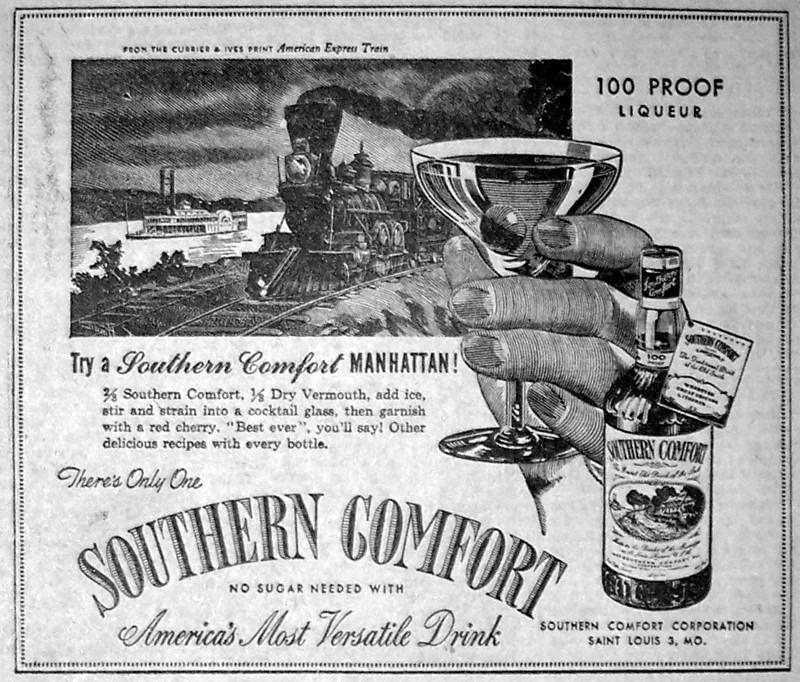
A vintage Southern Comfort advertisement, New Orleans era.
A handful of newer entries round out the picture, each solving a different regional problem. RumChata came out of a home kitchen in Wisconsin: Tom Maas, a retired liquor-industry veteran, launched his rum, dairy cream, cinnamon, and vanilla blend in 2009 and has made it in Pewaukee ever since. It is now the second-best-selling cream liqueur in the country behind Baileys, built on Wisconsin dairy instead of Irish whiskey.
St. Elder took a different approach: a Massachusetts-made elderflower liqueur built as a domestic, lower-priced answer to St-Germain, the French elderflower liqueur that had already taken over American cocktail menus by the time St. Elder arrived.
Malort is the strangest entry and the one with the deepest immigrant roots. Swedish immigrant Carl Jeppson sold his bitter, wormwood-based bäsk brännvin door to door in Chicago during Prohibition, pitched as a medicinal stomach tonic. The brand changed hands repeatedly over the following decades, and after the Chicago distillery that made it closed in the mid-1970s, production left the city for Florida for roughly forty years. Chicago’s own CH Distillery bought the brand in 2018 and brought production back to the city in 2019. It remains an overwhelmingly regional habit, a dare more than a drink, concentrated almost entirely in Illinois and the Midwest.
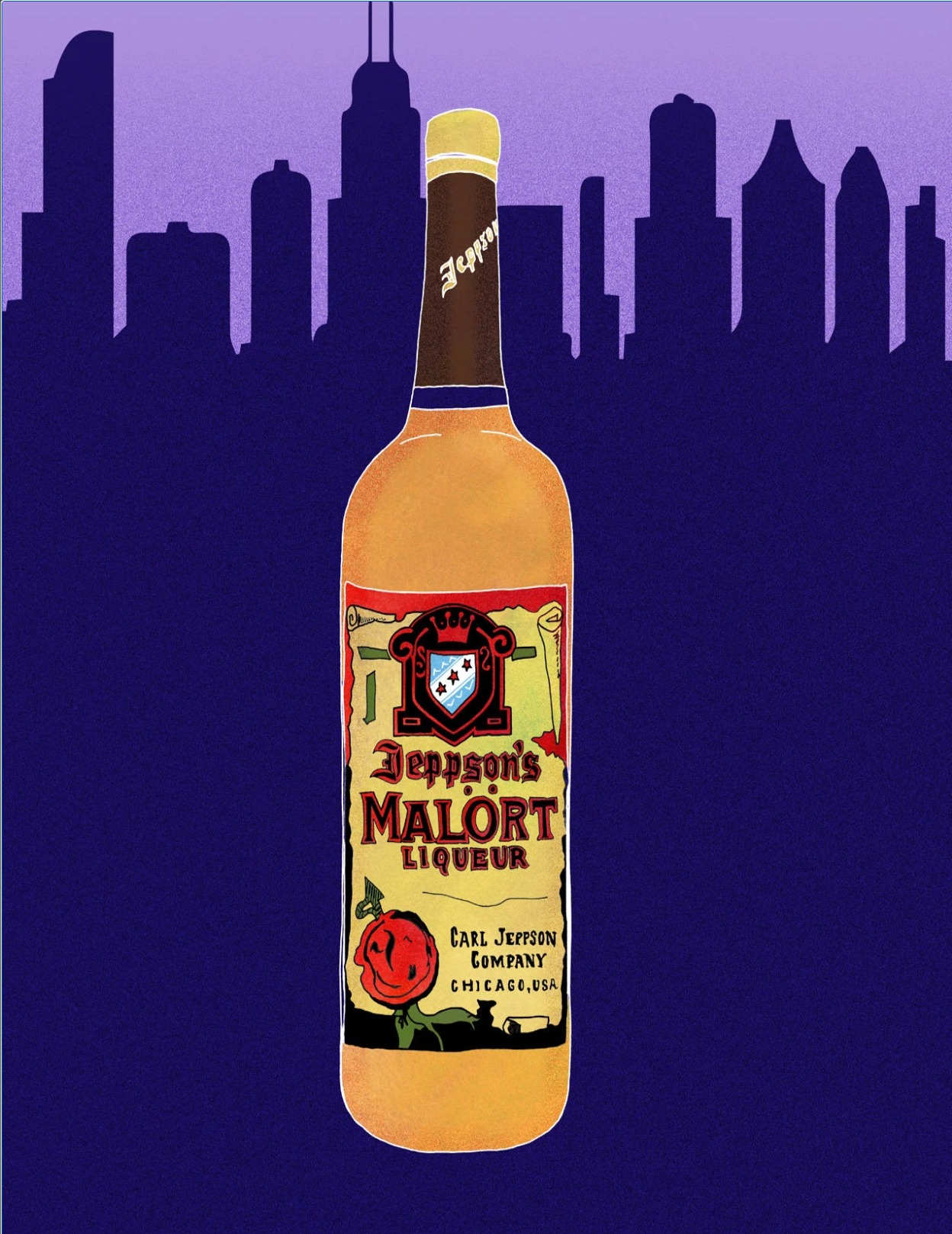
Jeppson’s Malort, still concentrated almost entirely in Chicago and the Midwest.
Sorel is a hibiscus liqueur out of Brooklyn, and it goes the other direction entirely from RumChata and St. Elder, reviving something old rather than inventing something new. Jackie Summers built it under the label Jack from Brooklyn, based on a Barbadian sorrel recipe his own grandparents carried to Harlem in the 1920s. It is a modern liqueur built on a genuine, generations-old Caribbean tradition rather than a new idea looking for a backstory.
Brooklyn has also become the center of an American amaro movement, small distillers making Italian-style bitter liqueurs with American ingredients and branding. St. Agrestis, founded in 2014, and Faccia Brutto, founded in 2020, are the two most established names in that scene, alongside Forthave Spirits.
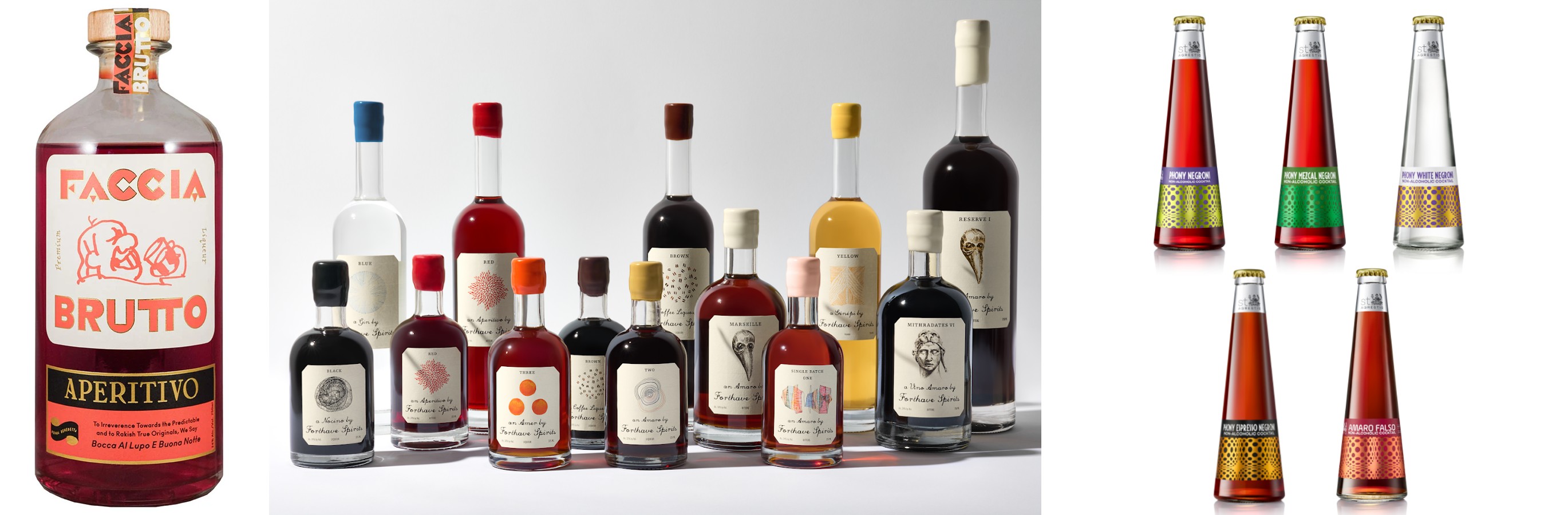
Brooklyn’s American amaro scene: St. Agrestis, Faccia Brutto, and Forthave Spirits.
None of this adds up to a founding myth the way rum or gin gets one. It is steady, regional demand solved differently depending on what was already on hand: Wisconsin dairy country, a Chicago immigrant neighborhood, a Barbadian family recipe carried to Harlem, a cluster of Brooklyn distillers chasing an Italian tradition. Each one grew out of a local market, not a founding story.
23. Native Distilling, Two Centuries Late
Every spirit in this piece so far was made legally, or illegally, by settlers and immigrants. Native nations were shut out of the industry entirely, and not by custom or lack of interest. It was federal law.
The Indian Intercourse Act of 1834 banned distilling on tribal land outright, part of a broader Jackson-era push framed as protecting Native communities from alcohol-related harm. In practice it also meant tribes could never legally build the same kind of spirits business that immigrant and settler communities were building right next door. The ban stood for 184 years.
Congress repealed it in 2018, after the Confederated Tribes of the Chehalis Reservation in Washington State pushed for the change. The Chehalis opened Talking Cedar Brewery and Distillery in 2020, the first distillery built on tribal land under the new law. Its Kayak Gin uses yarrow and fir tips, botanicals with a documented history in Native use in the region, alongside more conventional juniper.
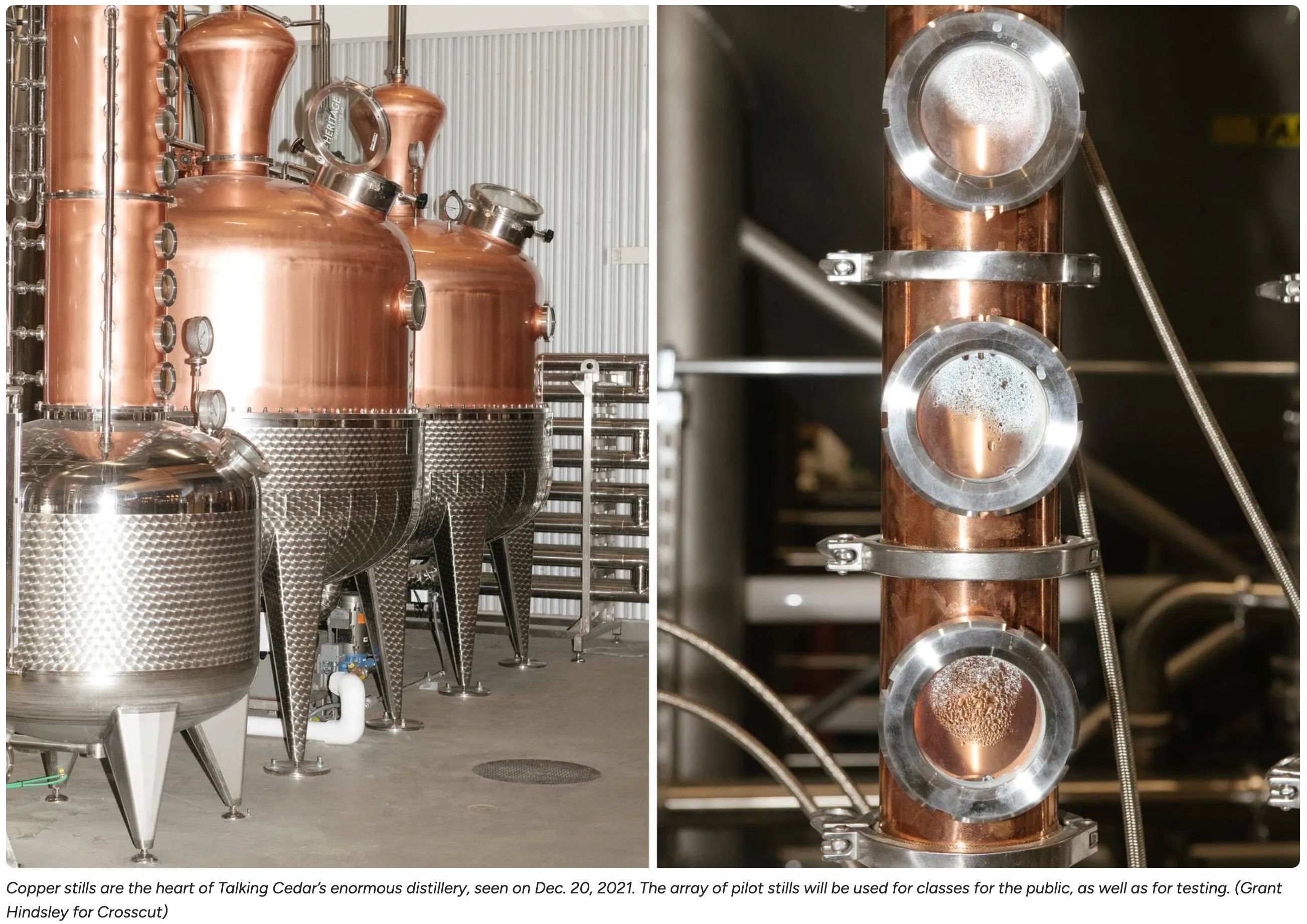
Stills at Talking Cedar, the first distillery built on tribal land since the 1834 ban was repealed.
Copper Crow Distillery, opened in 2017 by Curt and Linda Basina of the Red Cliff Band of Lake Superior Chippewa in Wisconsin, is generally credited as the first Native American-owned distillery in the country. It predates the 2018 repeal, though, and isn’t built on reservation trust land the way Talking Cedar is. Copper Crow makes a whey-based gin and vodka using dairy byproduct from a nearby Wisconsin creamery, along with rum and maple- and birch-sweetened spirits, maple sugaring itself being a technique colonists learned from Native communities centuries earlier. Heritage Distilling, a non-Native company based in Washington, has since built a network of partnerships with tribes across the Pacific Northwest and Midwest to help more of them enter the industry now that the door is legally open.
This is a young, small part of the American spirits story, a handful of distilleries a few years old, built on a door that stayed locked for nearly two centuries. It deserves its own chapter, not a mention folded into someone else’s.
Part 5 picks up with cigars, the oldest cash crop in this whole series and, in its own way, the most imported American industry of them all.
Dates Worth Knowing
- 1733: The Molasses Act taxes non-British Caribbean molasses
- 1750s–1770s: Massachusetts alone produces more than 40 percent of North America’s rum
- 1764: The Sugar Act attempts real enforcement, becomes a spark toward Revolution
- 1834: The Indian Intercourse Act bans distilling on tribal land
- 1874: Martin Wilkes Heron creates Southern Comfort in New Orleans
- 1917: The Russian Revolution forces the Smirnov family out of Moscow
- 1938: John Martin buys the US rights to Smirnoff for roughly $14,000
- 1941: The Moscow Mule is invented at the Cock ’n’ Bull in Hollywood
- 1974: Mexico establishes the Denomination of Origin for tequila
- 1982: Jörg Rupf founds St. George Spirits, the first modern American craft distillery
- 1994: NAFTA locks in the US and Canada’s legal ban on domestically made “tequila”
- 1997: Prichard’s Distillery in Tennessee becomes an early mover in the modern American rum revival
- 2010: Privateer Rum begins distilling in Ipswich, Massachusetts, reviving the New England style
- 2013: Casamigos launches as a private tequila before demand forces it into commercial release
- 2017: Copper Crow Distillery opens in Wisconsin, generally credited as the first Native American-owned distillery
- 2018: Congress repeals the 1834 ban on distilling on tribal land
- 2020: Talking Cedar opens on the Chehalis Reservation, the first distillery built on tribal land under the new law
Houses and Brands Worth Knowing
Privateer Rum, Ipswich, Massachusetts, built specifically to revive the old New England distilling style.
Richland Rum, Georgia, an American rum producer growing and distilling its own sugarcane on-site.
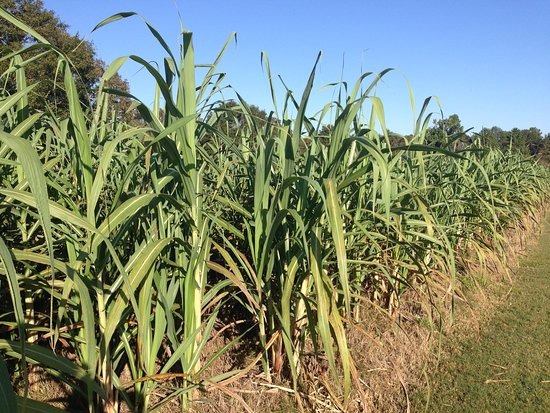
Richland Rum’s own sugarcane fields, harvested and distilled on the estate.
St. George Spirits, Alameda, California, the first modern American craft distillery, founded 1982.
Casamigos, distilled in Jalisco, Mexico, owned and marketed by an American company since 2013.
Southern Comfort, born in New Orleans in 1874, now produced in Kentucky by the Sazerac Company.
Talking Cedar, Chehalis Reservation, Washington, the first distillery built on tribal land after the 2018 repeal.
Copper Crow, Red Cliff Band of Lake Superior Chippewa, Wisconsin, generally credited as the first Native American-owned distillery in the country.
Recipes Worth Keeping
Scarlett O’Hara (Southern Comfort)
- 2 oz Southern Comfort
- 1 oz cranberry juice
- juice of ½ lime
- lime wedge to garnish
Method: Shake with ice. Strain into a highball glass over fresh ice. Garnish with a lime wedge.
Editorial note: commonly credited to 1939, timed to the premiere of Gone with the Wind. The origin story is widely repeated, not independently documented.
Alabama Slammer (Southern Comfort, amaretto, sloe gin)
- 1 oz Southern Comfort
- 1 oz amaretto
- 1 oz sloe gin
- 2 oz orange juice
- orange slice and cherry to garnish
Method: Shake hard with ice. Strain into a highball glass over fresh ice. Garnish with an orange slice and a cherry. Often served as a shot instead, without the ice.
Editorial note: credited to the University of Alabama, late 1960s to early 1970s. First appeared in print in the 1971 Playboy Bartender’s Guide as simply “Alabama,” made with lemon juice instead of orange juice. No single inventor is documented.
Chicago Handshake (Malort)
- 1 shot Jeppson’s Malort
- 1 Old Style beer
Method: Shoot the Malort. Chase with the beer. That’s the whole drink.
Editorial note: a boilermaker, not a mixed cocktail. Included because it’s the single most common way Malort is actually consumed in Chicago bars today.
Cinnamon Toast Crunch Shot (RumChata)
- 1 oz RumChata
- 1 oz Fireball Cinnamon Whisky
Method: Shake with ice or layer straight into a shot glass. Serve cold.
Editorial note: a modern bar invention, not historic, but far and away the drink most people order RumChata for, and worth including for that reason alone.