Parts 1 and 2 covered spirits and perfume. This installment covers the strangest, most invented corner of American drinking culture: an entire tropical fantasy built almost entirely in a converted Hollywood storefront.
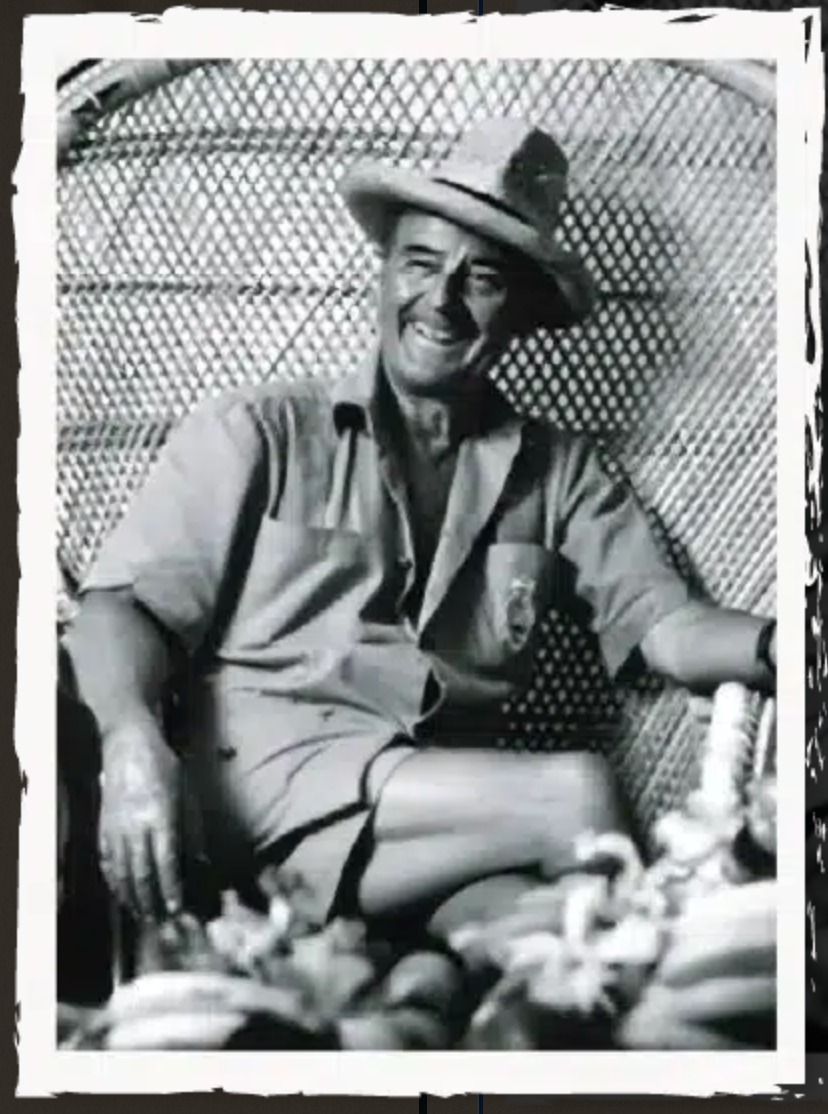
Ernest “Donn” Beach, who built the entire tiki aesthetic around a persona and a bar most of his customers assumed was more authentic than it was.
America's 250th — A Five-Part Series
My own first tiki bar was Otto’s Shrunken Head in the East Village, back in 2006. I went in because it was gritty and a little punk rock, not because I knew anything about tiki, and the drinks caught me off guard. I ordered a piña colada first, mostly because of the song, and loved it. Then a Painkiller, and loved that too. By the time I got to a Mai Tai, I was hooked. I still think about what else I can build around coconut.
12. Two Bartenders and a Made-Up Paradise
Tiki did not come from the Pacific. It came from Prohibition-era Los Angeles, invented almost entirely by a man who had barely lived in Polynesia and had a talent for making people believe otherwise.
Ernest Raymond Beaumont Gantt grew up bouncing between Texas and Louisiana, then spent his twenties sailing through the Caribbean and the South Pacific as a merchant seaman, picking up a little bit of small-time bootlegging along the way. As Prohibition ended, he opened a tiny bar on McCadden Place in Hollywood and called it Don’s Beachcomber; accounts split between late 1933 and 1934 for the opening. He packed it with real driftwood, ship’s lanterns, and tikis and nautical junk he had actually collected on his travels, and he built the drink menu around rum, since almost none of it was distilled domestically and Prohibition had barely touched the supply.
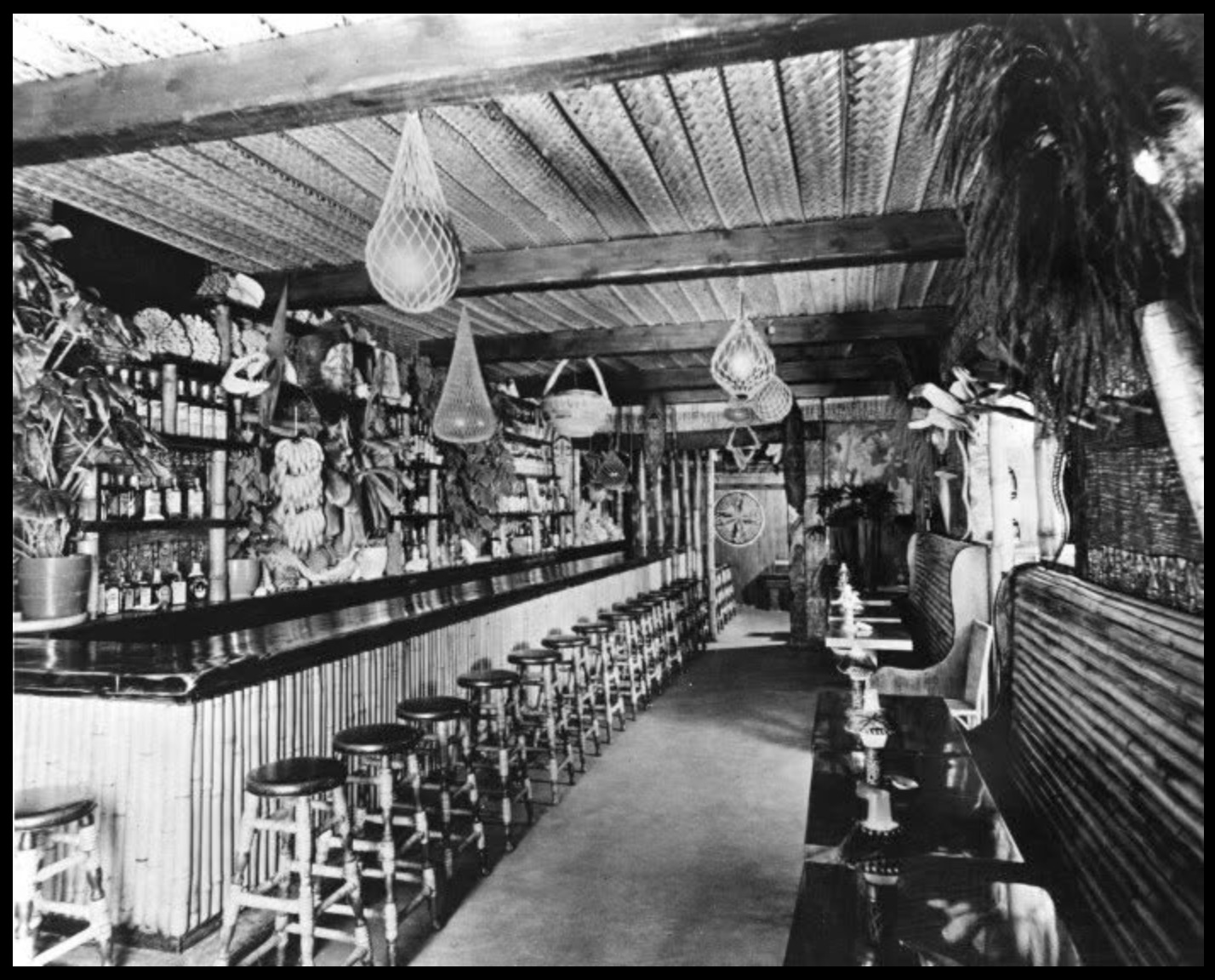
The bar’s interior, built from real driftwood and nautical salvage Beach had collected on his own travels.
He started calling himself Don the Beachcomber, then legally changed his name to Donn Beach. His signature drink was the Zombie, a multi-rum, high-proof cocktail he limited to two per customer, allegedly to stop people from getting too drunk to pay the bill. It became a national sensation after an imitator served a version of it to thousands of people at the 1939 New York World’s Fair.
By 1937 the bar had expanded across the street, added a full restaurant serving what he marketed as exotic Cantonese-Polynesian cuisine (mostly good Cantonese food with a new name attached), and started spinning off locations around the country. At its peak the chain ran to sixteen restaurants.
13. The Mai Tai War
Victor Bergeron opened a small saloon called Hinky Dinks in Oakland in November 1934, on a $500 loan, mostly selling cheap sandwiches and drinks to Depression-era customers. In 1937 he visited Don the Beachcomber in Hollywood and came home converted. He tore out the hunting-lodge decor, put up bamboo and tropical paraphernalia, and renamed the place Trader Vic’s.
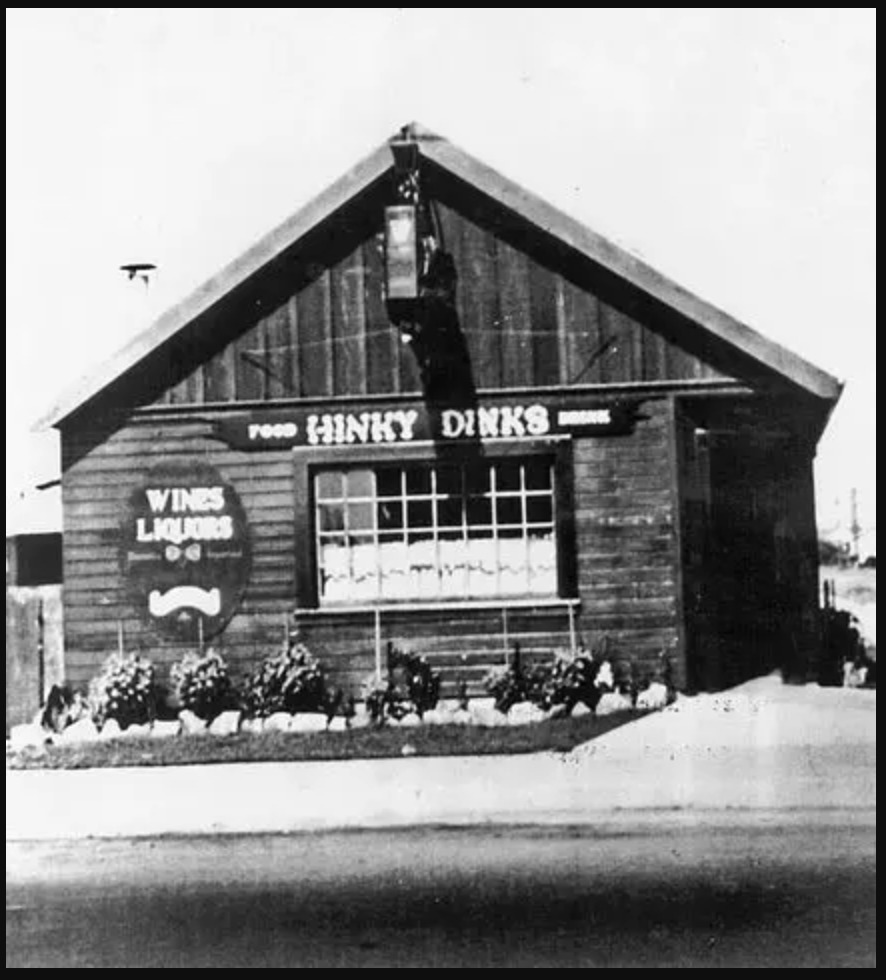
The original Oakland location, before it became Trader Vic’s.
In 1944, Bergeron mixed 17-year-old Jamaican rum with lime juice, orange curaçao, orgeat, and rock candy syrup for two friends visiting from Tahiti. One of them tasted it and said, roughly, “Mai tai roa ae,” Tahitian for something close to “out of this world, the best.” Bergeron named the drink after that.
Beach and Bergeron spent decades publicly insisting they had invented the Mai Tai first, and the argument never really got settled. Most cocktail historians side with Bergeron on this particular drink, though Beach had been serving equally strong rum cocktails under other names for years before. It does not really matter who is right. The rivalry sharpened both men’s work, and the argument itself became part of tiki’s mythology, repeated in bars to this day.
Bergeron told customers a shark took his leg, and by his own account would stick an ice pick into the wooden one for laughs. He had actually lost it as a small child, though published accounts disagree on whether the cause was tuberculosis or a cable-car accident. The Mai Tai was far from the only story he was willing to improve on.
14. Escapism Sells
Context matters here. This started in the Depression and grew through a world war. A tiki bar offered a cheap, fully controlled vacation to a place that existed mostly in a set designer’s imagination, no passport or plane ticket required.
World War Two mattered even more than the Depression did. Hundreds of thousands of American servicemen passed through the actual Pacific theater and came home with a real hunger for anything that reminded them of it, even a sanitized, invented version safely located in Hollywood or Oakland. Postwar prosperity did the rest. Commercial air travel to Hawaii was not yet common or cheap, so tiki bars did the traveling for people. A family could get dressed up on a Saturday, order a pupu platter, and feel like they had been somewhere.
James Michener served in the U.S. Navy in the Pacific during the war, assigned as a naval historian. His 1947 story collection Tales of the South Pacific, drawn directly from that service, won the Pulitzer Prize the following year and became the Rodgers and Hammerstein musical, then the 1958 film covered later in this piece. Tiki bars and Broadway were selling the same postwar fantasy at almost the same moment.
The chains grew fast. Don the Beachcomber pushed into the double digits. Trader Vic’s licensed its name to Hilton Hotels in 1955 for $2 million, putting tiki bars inside Hilton properties across the country and eventually overseas.
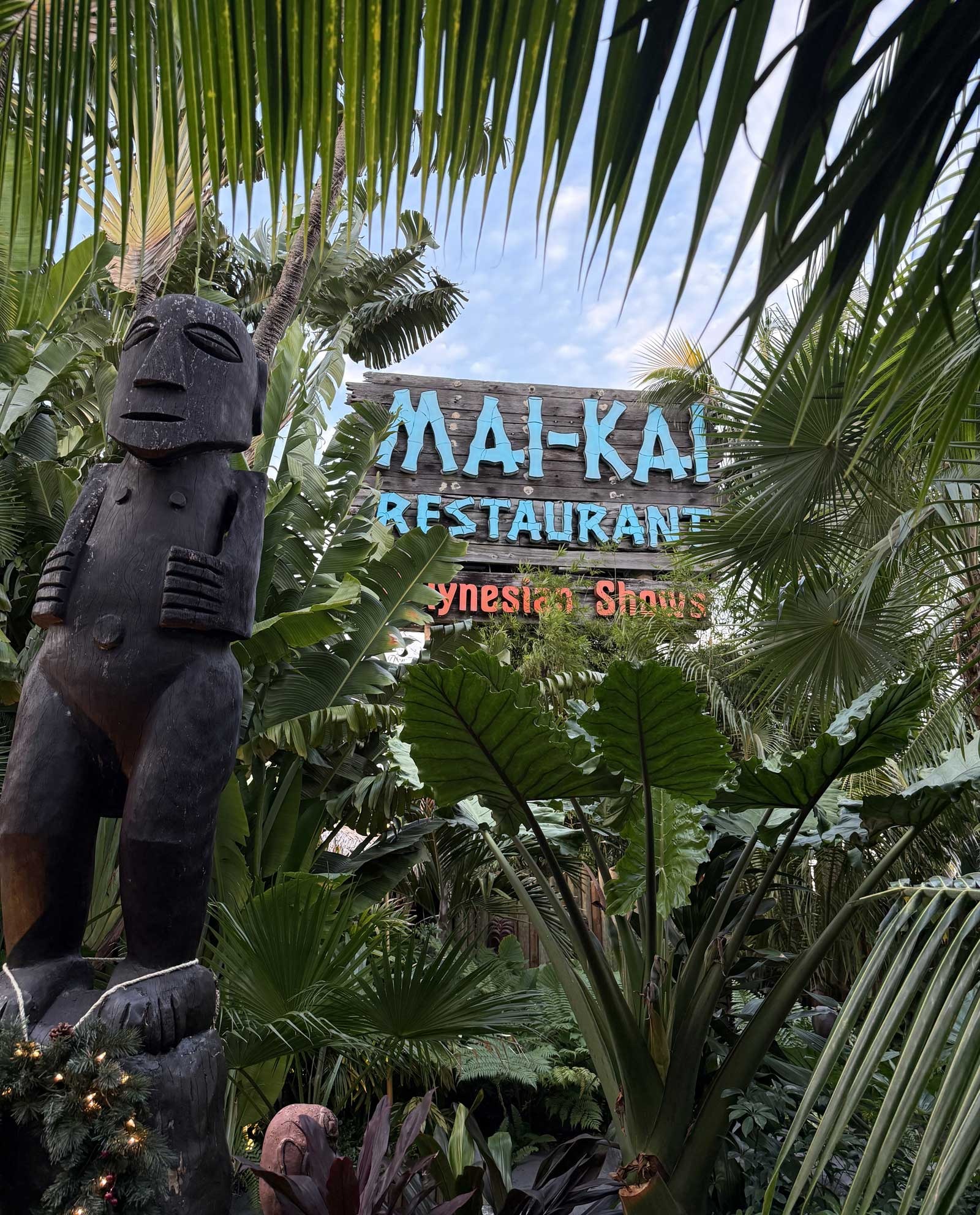
The Mai-Kai’s sign, largely unchanged since 1956.
The Mai-Kai opened on December 28, 1956, in Fort Lauderdale, built by brothers Bob and Jack Thornton for roughly $350,000, close to $4 million today. It grew to eight dining rooms and more than 600 seats, still runs many of the original cocktail recipes developed by its first head bartender, Mariano Licudine, and is now listed on the National Register of Historic Places, one of the very few grand tiki palaces from that era still standing and operating.
15. What Tiki Actually Borrowed
This is worth being honest about, the same way Part 1 was honest about rum and the slave trade.
Tiki was never Polynesian culture. It was a collage: Cantonese restaurant food, Hawaiian and Tahitian words and imagery, carved masks and design elements pulled from across the Pacific and sometimes Africa, assembled by American businessmen who had traveled through the region but were not from it and did not consult the cultures they were borrowing from.
This isn't a new criticism invented by modern audiences; it's now discussed openly inside the tiki community itself, not just by outside critics. Bartenders and writers working in the genre have argued in print over which parts of the old aesthetic are worth keeping, which need to be dropped or reframed, and how to credit the real cultures involved instead of presenting the whole thing as authentic Polynesian tradition — and some argue there is no version of it that survives the objection. That conversation is ongoing and doesn’t have a tidy conclusion, but it deserves to be named directly, not skipped past. The recovery of the Filipino bartenders who actually built these drinks, Ray Buhen and the three men who worked alongside him at Don the Beachcomber among them, is part of the same reckoning.
16. The Crash and the Comeback
By the 1970s, tastes had shifted toward minimalism, and tiki started reading as dated kitsch rather than sophisticated escape. Most of the original bars closed, including the majority of Don the Beachcomber locations. Beach himself had lost the rights to the name decades earlier, in the settlement of his divorce from his business partner Sunny Sund, well before the decline set in. The original Hollywood location closed in 1985; no source I could reach fixes the year the building itself came down.
The revival started quietly in the 1990s, driven by a small group of researchers and enthusiasts. Jeff “Beachbum” Berry did the most important early work, tracking down surviving original bartenders, including Ray Buhen, who had worked the bar at the original Don the Beachcomber and later opened his own place, Tiki-Ti, in Los Angeles, to reconstruct recipes that Beach had deliberately kept secret through a system of code names and pre-mixed syrups.
Martin Cate opened Forbidden Island in Alameda in 2006, then Smuggler’s Cove in San Francisco in late 2009, applying the same rigor the wider craft cocktail movement was bringing to whiskey and gin. Smuggler’s Cove built the largest rum collection in the country, more than 1,300 bottles at last count, and has been repeatedly named one of the best bars in the world since it opened. This time the drinks got sharper even as the aesthetic became more self-aware about where it came from.
17. Tiki Goes Global
Modern tiki spread well beyond the United States, and it did so early enough that some of the most historically important tiki rooms left in the world are no longer American.
Trader Vic’s itself opened in Munich in 1971, in the basement of the Hotel Bayerischer Hof, and in Tokyo in 1974, on the fourth floor of the Hotel New Otani. The Munich location is the second-oldest Trader Vic’s still operating anywhere, after London. The Tokyo location still mixes drinks off Bergeron’s original recipes, the only Trader Vic’s left that does, and functions today as something close to a working museum of the brand’s golden age.
Berlin got its own tiki bar in 1976, Rum Trader, founded by a bartender who had worked at Trader Vic’s after the war and brought the rum-forward cocktail style home with him. It kept the drinks and dropped the coconut-and-grass-skirt decor entirely, closer in feel to a dark, formal cocktail den than a tropical fantasy.
London built one of the largest concentrations of tiki bars outside the US, including its own Trader Vic’s, Trailer Happiness in Notting Hill, and Mahiki in Mayfair, which built a reputation as a favorite of Prince Harry’s in the 2000s. When a panel of the field’s leading historians, Sven Kirsten, Jeff Berry, and Martin Cate among them, ranked the fifteen most important tiki bars in the world in 2017, several of them were in London, with one each in Munich, Tokyo, and Barcelona.
Conventions keep the modern scene connected across all these cities. Tiki Oasis in San Diego and the Hukilau, hosted at the Mai-Kai, draw thousands of enthusiasts every year, part costume party, part cocktail seminar, part living history museum. Exotica music, Martin Denny, Les Baxter, Arthur Lyman, provided the original soundtrack in the 1950s and still gets played in the current wave of bars, a genre that grew out of the same postwar appetite for an imagined Pacific.
Tiki’s one constant ingredient, through all of this, was rum. Which is a good place to pick up the rest of America’s spirits story, in Part 4.
Dates Worth Knowing
- December 1933 (some accounts, including the brand’s own, say 1934): Don’s Beachcomber opens on McCadden Place, Hollywood
- November 17, 1934: Victor Bergeron opens Hinky Dinks in Oakland on a $500 loan
- 1937: Bergeron visits Don the Beachcomber, renames his bar Trader Vic’s
- 1939: The Zombie is served at the New York World’s Fair by an imitator
- 1944: The Mai Tai is created at Trader Vic’s in Oakland
- December 28, 1956: The Mai-Kai opens in Fort Lauderdale
- 1955: Trader Vic’s is licensed to Hilton Hotels worldwide for $2 million
- 1985: The original Don the Beachcomber closes
- 2006: Martin Cate opens Forbidden Island in Alameda
- Late 2009: Smuggler’s Cove opens in San Francisco, launching the modern tiki revival in earnest
Bars Worth Knowing
Don the Beachcomber, the original invented tiki bar. At its peak the brand ran 16 locations before ownership changes shrank it, with the last one closing in 2018. Current owner 23 Restaurant Services revived it in Madeira Beach, Florida, in February 2024, then closed that location for good after Hurricanes Helene and Milton flooded the space that autumn. The true comeback is a ground-up flagship planned for Hamlin, Florida, near Walt Disney World, still targeting 2026. In the meantime, the brand is opening smaller bars under a new label, the Gantt Reserve Collection, starting with Morgan’s Cove in Tampa in mid-2024, with a further location planned for Plantation, Florida.
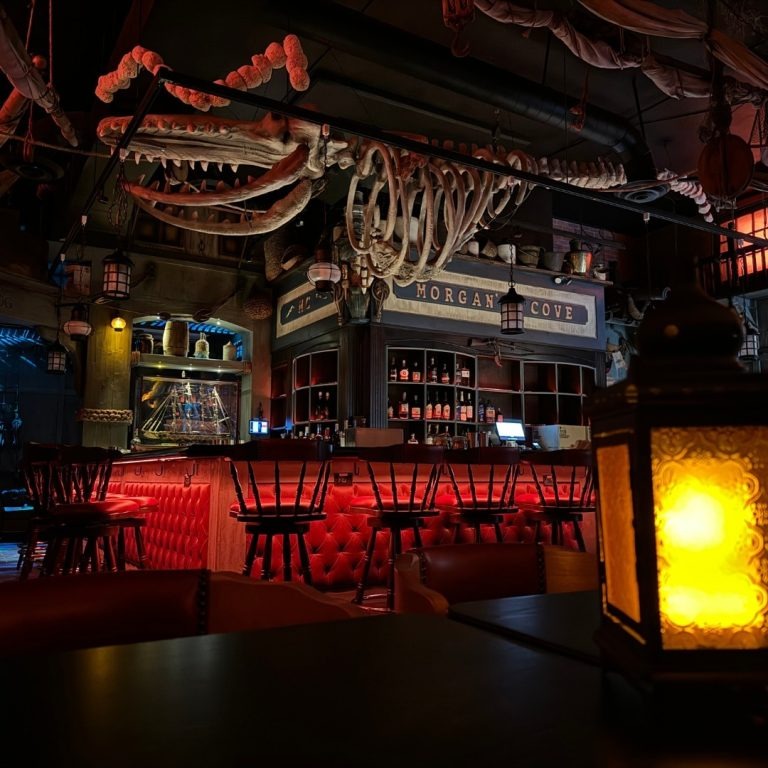
Morgan’s Cove, Tampa, the first bar under the new Gantt Reserve Collection label.
Trader Vic’s, headquartered in Martinez, California, still operating worldwide, with more locations today across the Middle East and Asia than in the US.
The Mai-Kai, Fort Lauderdale, Florida, on the National Register of Historic Places, one of the last places still serving original Don the Beachcomber-era recipes.
Tiki-Ti, Los Angeles, opened by original Don the Beachcomber bartender Ray Buhen, still family-run by his descendants. The bar has sold exactly one beer since the 1960s, sitting on a shelf with a sign reading “The Last Beer,” its price climbing every year, for whoever’s desperate enough, or in on the joke, to buy it.
Smuggler’s Cove, San Francisco, the flagship of the modern tiki and rum revival, opened by Martin Cate in 2009.
The Kahiki Supper Club, Columbus, Ohio, once the largest tiki restaurant in the country, seated 500-plus guests behind two flame-headed Moai statues. Closed and demolished in 2000; the brand lives on as a frozen food line.
The Tonga Room, in the basement of San Francisco’s Fairmont Hotel, operating continuously since 1945, complete with an indoor lagoon and a floating band on a raft.
Trader Vic’s Munich (1971, Hotel Bayerischer Hof) and Trader Vic’s Tokyo (1974, Hotel New Otani), the second- and among the oldest surviving Trader Vic’s locations anywhere. Tokyo still pours from Bergeron’s original recipes.
Rum Trader, Berlin, founded 1976 by a bartender who trained at Trader Vic’s, still one of the city’s most respected cocktail bars.
Books and Screen Moments Worth Knowing
Tiki and Hollywood grew up together, not one from the other. Bird of Paradise, a South Seas romance, came out in 1932, a year before Don’s Beachcomber opened. The movie wave and the bar wave fed each other for the next three decades.
Pagan Love Song (1950), an MGM musical shot in Hawaii and set in Tahiti, starring Esther Williams and Howard Keel, with a young Rita Moreno in her first major role. Widely considered one of the weaker Esther Williams vehicles, but a clean snapshot of how the studios sold the South Seas fantasy.
South Pacific (1958), the film version of the Rodgers and Hammerstein musical, adapted from James Michener’s Tales of the South Pacific. The clearest big-studio version of the same escapism Don the Beachcomber was selling in a bar.
Blue Hawaii (1961), Elvis Presley’s tropical vehicle, arriving right as tiki’s golden age hit its commercial peak.
Walt Disney’s Enchanted Tiki Room, Disneyland, opened June 23, 1963. The first Audio-Animatronics attraction ever built, and the clearest sign of how far tiki had penetrated mainstream American culture by the early 1960s. It later ran in Florida and Tokyo as well.
Kon-Tiki, a real 1947 expedition, not a movie first. Norwegian explorer Thor Heyerdahl sailed a balsa raft 4,300 miles from Peru to Polynesia to test his theory that Polynesia had been settled from South America rather than Southeast Asia. The 1950 documentary of the voyage won the Academy Award for Best Documentary Feature. A 2012 dramatized version was nominated for Best Foreign Language Film. Heyerdahl’s theory itself has since been mostly overturned. Genetic and linguistic evidence points to Polynesia being settled from Southeast Asia, not South America. What the expedition proved was that the crossing was physically possible, not that it happened. The name still made its way straight into tiki bar culture: Sheraton hired tiki designer Stephen Crane to build a Kon-Tiki restaurant chain in the 1950s specifically to compete with Hilton’s Trader Vic’s.
I read a comic book about the Kon-Tiki expedition as a kid and it completely took me over. Years later, walking into Otto’s Shrunken Head for the first time, it threw me straight back to that book. A tiki drink can still do that to me now, pull up that same expedition, that same feeling, out of nowhere.
The Book of Tiki (Sven Kirsten, 2000), the foundational modern history of the aesthetic, written by the person most responsible for turning tiki into a serious subject of design history rather than a joke.
Beachbum Berry’s Sippin’ Safari (Jeff Berry), the reconstructed-recipe bible for the genre, the direct source for most of the historically accurate versions of Beach’s and Bergeron’s drinks that bars pour today.
Smuggler’s Cove: Exotic Cocktails, Rum, and the Cult of Tiki (Martin and Rebecca Cate, 2016), winner of the 2017 James Beard Award for a beverage book, the current generation’s answer to Kirsten and Berry.
Tikimentary: In Search of the Lost Paradise (2010), a documentary that follows the modern tiki subculture, tikiphiles, through Tiki Oasis in San Diego and the Hukilau at the Mai-Kai. A good snapshot of who keeps this scene alive today, decades after the original bars closed.
Recipes Worth Keeping
The Zombie (Don the Beachcomber, reconstructed)
- ½ oz fresh lime juice
- ½ oz fresh grapefruit juice
- ½ oz falernum
- ½ oz cinnamon syrup
- 1 oz gold Puerto Rican rum
- 1 oz Jamaican rum
- 1 oz Demerara rum (151 proof, use carefully)
- 1 tsp grenadine
- 1 dash Pernod or absinthe
- 6 drops Angostura bitters
- crushed ice, mint sprig to garnish
Method: Shake all ingredients hard with crushed ice. Pour unstrained into a tall glass. Top with more crushed ice if needed. Garnish with mint. Limit yourself to two, per house rules.
Editorial note: this is a widely published reconstruction of Beach’s secret original, not Berry’s own build. Berry’s published 1934 reconstruction, decoded from bartender Dick Santiago’s notebook, runs bigger and uses Don’s Mix rather than separate grapefruit and cinnamon: ¾ oz lime, ½ oz falernum, 1½ oz gold Puerto Rican rum, 1½ oz gold or dark Jamaican rum, 1 oz 151-proof Demerara, 1 tsp grenadine, 6 drops Pernod, a dash of Angostura, and ½ oz Don’s Mix (two parts grapefruit juice to one part cinnamon syrup). Beach’s working formula was never published in his lifetime, so treat any version as a reconstruction. Gautam’s preference: Jamaican rum for the funk it brings. A white Puerto Rican rum works as a lighter substitute.
The Mai Tai (Trader Vic’s, 1944 original)
- 2 oz aged Jamaican rum (Bergeron used a 17-year-old; 8–10 year works today)
- ½ oz orange curaçao
- ¼ oz orgeat syrup
- ¼ oz rock candy syrup (or simple syrup)
- juice of 1 lime, shell reserved
Method: Shake hard with crushed ice. Pour unstrained into a rocks glass. Garnish with a mint sprig and the spent lime shell.
Editorial note: close to Bergeron’s own published account of the original, with one difference worth naming — Difford’s Guide transcribes the 1944 build with ½ oz French orgeat rather than the ¼ oz given here. Modern bars often substitute a rum blend since the original 17-year Jamaican rum he used is no longer produced in that form. Gautam’s preference: Appleton Estate 17-Year Legend, if you can find and afford it, said to be the closest clone of the original Wray & Nephew 17. Otherwise split Appleton Estate 12 with an agricole-style rhum from Martinique or Guadeloupe.