Key Takeaways
- Fragrance headaches are chemistry, not sensitivity: synthetic musks, aldehydes, and even natural compounds like linalool and limonene can trigger reactions at high concentrations.
- Concentration and ventilation matter more than the formula itself, most complaints trace back to too much product in too small a space.
- For migraine-prone wearers, lighter Eau de Toilette or Eau de Cologne concentrations that stay close to the skin reduce the chance of triggering a response.
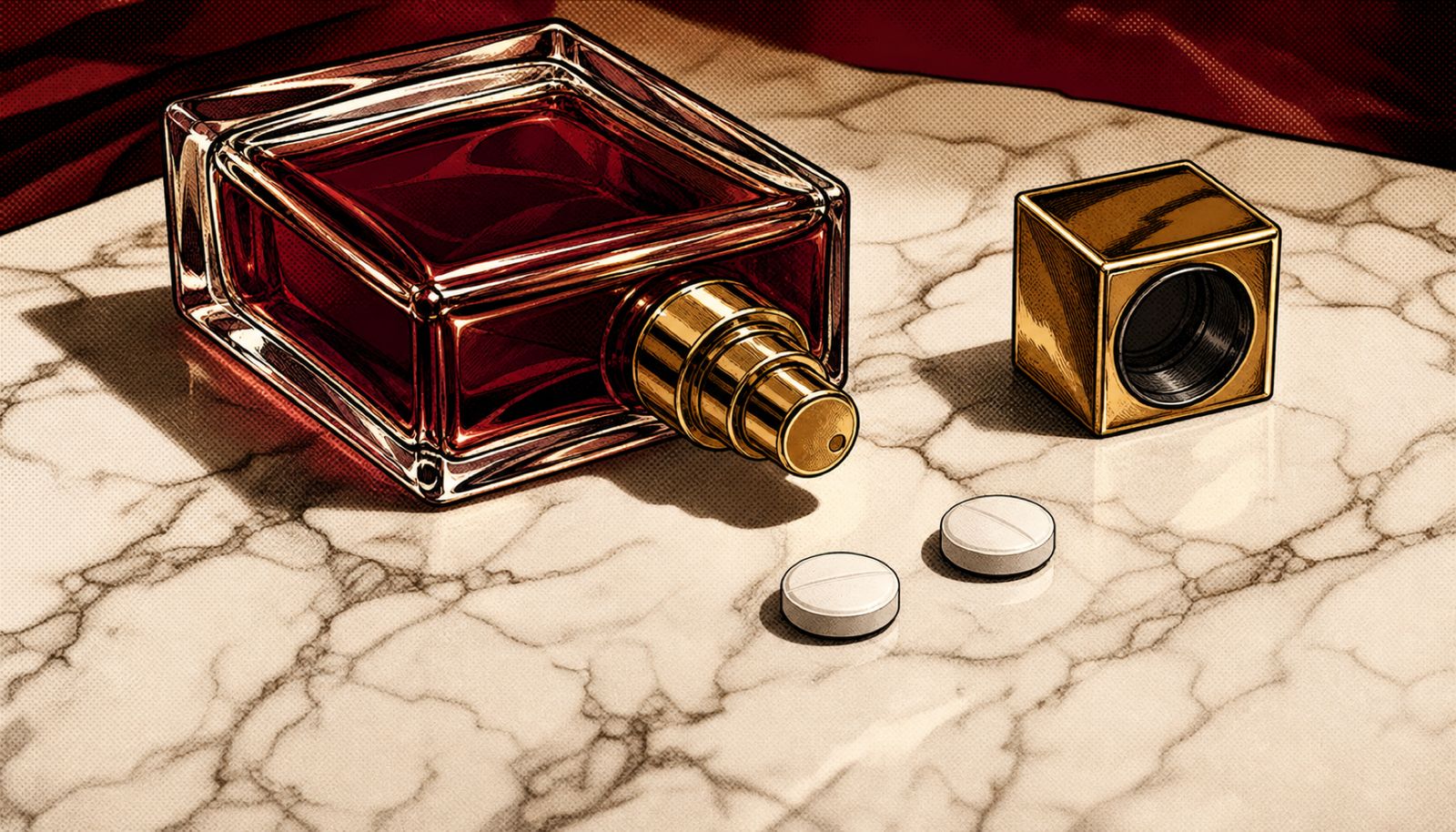
Someone walks into the room while the perfume is already there, thirty seconds ahead of them. Your eyes water. Your temples tighten. You start planning your exit. It happens to almost everyone at some point. But why does it happen to some people and not others, and why do some fragrances cause it when others don't?
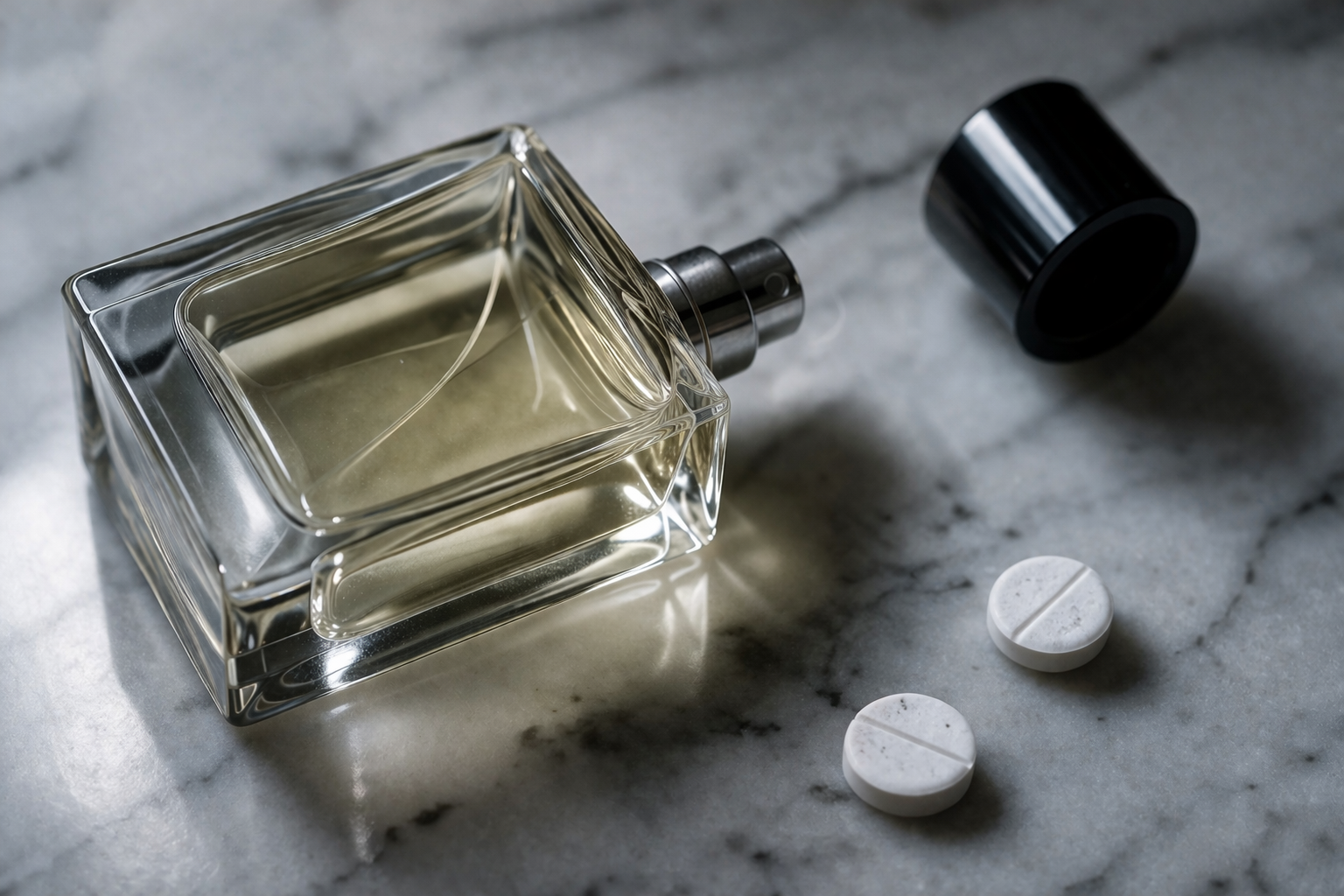
It's Chemistry, Not Sensitivity
The short answer is that fragrance is chemistry. A modern perfume can contain anywhere from 50 to 300 individual aroma compounds. Some of those compounds trigger responses in the nose and nervous system that, at sufficiently high concentrations, can cause headaches, nausea, or respiratory irritation.
The most commonly cited culprits are synthetic musks and certain aldehydes, used to add depth and longevity to a fragrance. Anecdotally, and in sensitivity surveys, they're also among the compounds most often flagged by sensitive people, though rigorous research directly linking specific fragrance molecules to headache onset is still limited.
Natural ingredients cause reactions, too. Linalool, limonene, and eugenol are all natural compounds that frequently appear on sensitivity lists. And then there are the big, dense base notes: heavy oud, animalic musks, civet-adjacent materials. These are potent by design. In a small space, they can be genuinely oppressive, even for people who love them in smaller doses.
Concentration and Ventilation
Concentration matters as much as the formula itself. An Extrait de Parfum at full strength in an enclosed space is a very different experience from the same fragrance lightly applied outdoors. Most headache complaints trace back to volume, not the fragrance.
Ventilation matters too. Perfume molecules disperse quickly in open air. In a closed office, elevator, or car, they accumulate fast. The same scent that smells elegant in a garden can be overwhelming in a conference room.
When It Becomes a Migraine
For people who get migraines specifically, the research points to trigeminal nerve activation. Certain volatile organic compounds in fragrances can directly stimulate this nerve, triggering a cascade that leads to a full migraine in susceptible individuals. This is a physical response, not an imagined one.
If you're prone to migraines, lighter skin scents and lower concentrations like Eau de Toilette or Eau de Cologne are worth trying. They project less and stay closer to the body, which significantly reduces the chance of triggering a response. Skin scents, those that barely project beyond arm's length, are often the safest option for sensitive wearers.
What to Do About It
For your own collection, skin-testing before committing avoids the problem of loving something in the bottle and hating it on your skin an hour later. If you get headaches from your own perfume, try applying less, using a lower concentration, or switching to simpler compositions with fewer synthetic fixatives. Sometimes the issue isn't the scent. It's just too much of it.
Fragrance is personal in every sense. The same compound that triggers a migraine in one person is barely perceptible to another. Understanding your own chemistry is part of building a collection that actually works for you, not just one that looks good on a shelf.
The Journal goes beyond the bottle.
One thoughtful piece each week on fragrance, spirits, cigars, and the stories behind them.

Sources
- The trigeminal nerve/migraine mechanism, and perfume as the top-cited odor trigger at 75.7% of odor-sensitive migraine patients: Silva-Neto, Peres & Valença, "Odorant substances that trigger headaches in migraine patients," Cephalalgia, 2014, journals.sagepub.com (the PubMed listing for the same study returned only a bot-verification page this pass, so the publisher link is used instead). A 2023 Scientific Reports study classifying migraine-triggering odors found perfume the most frequently reported trigger among 101 migraineurs (55.4%) and confirms that odors can stimulate the nasal trigeminal receptors alongside the olfactory nerve.
- Linalool, limonene, and eugenol as recognized sensitizers: the European Commission's Scientific Committee opinion on fragrance allergens.
- The estimate that a modern perfume can contain 50 to 300 individual aroma compounds is a rough one; published estimates for a typical formula vary (one industry breakdown puts it at roughly 30 to 200-plus, see Ggema), so read the figure in the body as an order-of-magnitude estimate rather than a precise count.
- The claim that synthetic musks and aldehydes are the leading headache culprits is widely repeated but less rigorously established: a BC Medical Journal editorial states plainly that robust studies linking fragrance exposure to adverse health effects, including headache mechanisms specifically, are lacking, which is why that claim in the body is presented as anecdotal and not as settled science.