Key Takeaways
- A few drops of water open up a whiskey's aromatics and soften the burn, it reveals flavor rather than diluting it.
- Nose the whiskey first and let it sit for a few minutes before tasting, oxidation changes and opens up what you're smelling.
- An age statement doesn't guarantee quality, it just means more time in wood, some of the most interesting whiskeys carry no age statement at all.
Whiskey appreciation is about patience and attention. Here's how to develop your palate.
Humphrey Bogart spent most of his younger years mixing martinis, beer, and Drambuie in the same evening. A friend eventually told him he was drinking like a kid. He switched almost exclusively to Scotch and never looked back. He came to call it "a very valuable part of my life." When filming The African Queen in Uganda in 1951, much of the cast and crew fell ill with dysentery from the water. Bogart and director John Huston avoided it entirely. Bogart's explanation: "All I ate was baked beans, canned asparagus, and Scotch whiskey. Whenever a fly bit Huston or me, it dropped dead." Whether the Scotch actually helped is beside the point. The man had conviction.
Start with Water
A few drops of water open up the whiskey, releasing aromatics and softening alcohol burn. It's not diluting. It's revealing. If you prefer ice, that's fine too. Just give it a minute or two to open up before you nose it. Cold mutes a lot of what makes whiskey interesting.
Nose First
Before tasting, spend time with the aroma. Swirl gently, breathe in. Wait a few minutes. Let the whiskey oxidize in the air. It changes the flavors and opens it up. Notice what you smell. Vanilla? Smoke? Fruit? There's no wrong answer.
Small Sips
Let it coat your mouth. Don't rush. Notice the texture, the flavors, how it changes. The finish tells you as much as the first taste.
Compare Thoughtfully
Tasting different whiskeys side by side helps you understand what you prefer. Not better or worse. Just different. One thing worth knowing: age statements don't tell the whole story. An older whiskey isn't automatically better. It's just been in wood longer. Some of the most interesting whiskeys out there have no age statement at all. Your palate develops over time. Don't force it. Enjoy the journey.
Mark Twain gets the credit for this one: "Too much of anything is bad, but too much good whiskey is barely enough." It's a quote-aggregator favorite with no verified source in Twain's own writings or speeches, so treat it as apocryphal even though it's the version everyone repeats. His real preference was Scotch, which he discovered in 1873 aboard a ship crossing the Atlantic and never wavered from again. He called it the best and smoothest whiskey he'd ever tried. A man who knew his own taste.
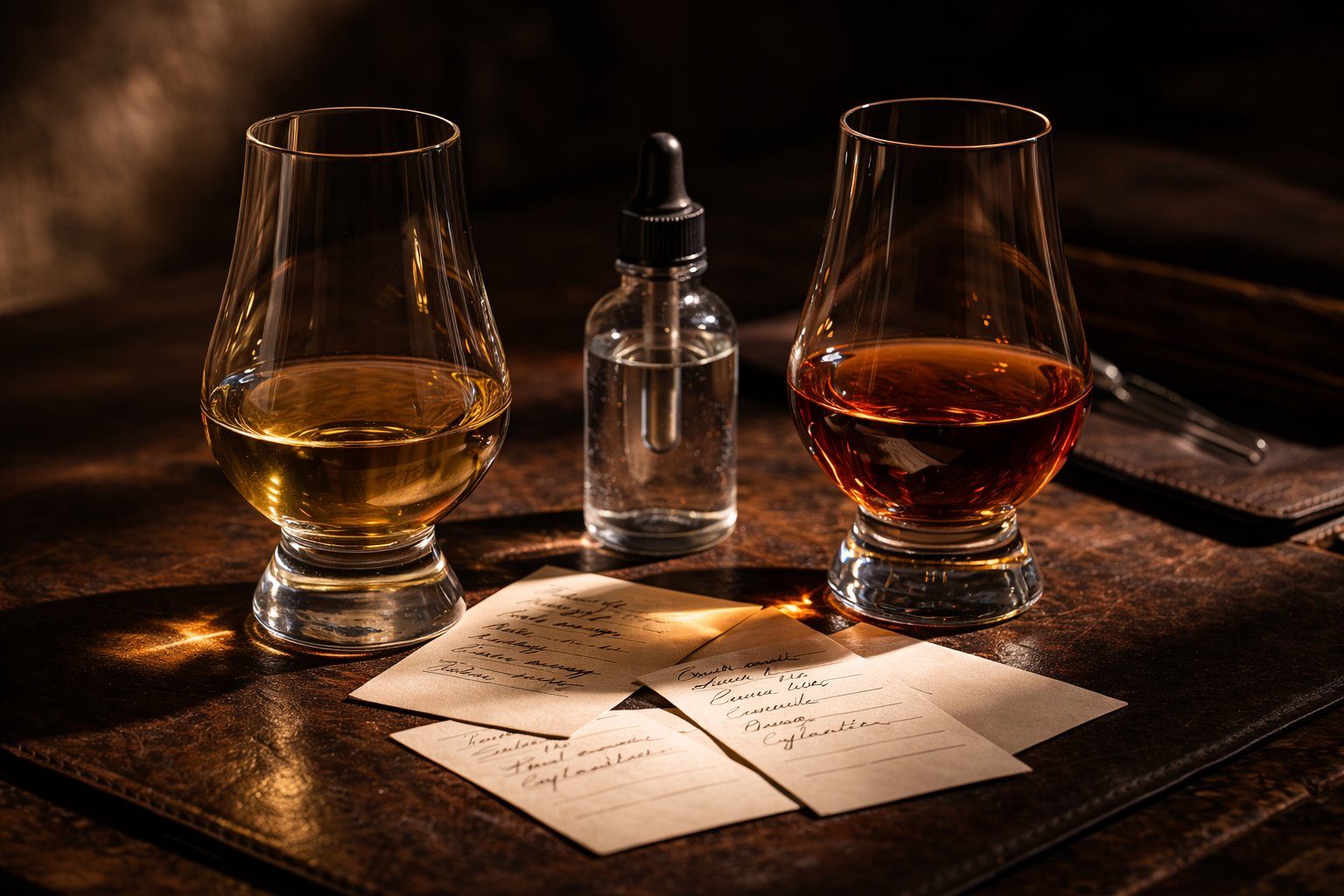
Tasting side by side is one of the fastest ways to train your palate. The difference in color alone tells you something.
The Journal goes beyond the bottle.
One thoughtful piece each week on fragrance, spirits, cigars, and the stories behind them.

Sources
- Bogart's early years mixing martinis, beer and Drambuie, producer Mark Hellinger telling him he was drinking "like a kid," his switch to Scotch, and his line calling it "a very valuable part of my life": Scotch Whisky's "Famous Whisky Drinkers: Humphrey Bogart".
- The 1951 filming of The African Queen on location in Uganda and the Congo, the dysentery that struck most of the cast and crew from the water, and the "whenever a fly bit Huston or me, it dropped dead" line: Scotch Whisky's Bogart profile above and The Vintage News, both of which treat the quote as Bogart's own tongue-in-cheek claim rather than a documented medical finding.
- Twain's 1873 introduction to Scotch aboard the SS City of Chester and his "best, smoothest whisky now on the planet" verdict: Scotch Whisky's Mark Twain profile.
- The "too much of anything is bad, but too much good whiskey is barely enough" line has no verified source in Twain's own writings or speeches. It does not appear in the Center for Mark Twain Studies' "The Apocryphal Twain" project, and it circulates only on uncited quote-aggregator sites. It is left in the body because it is the version everyone repeats, but it should be read as apocryphal rather than documented.